How has the church almost lost the relational sense of knowing Jesus that was so common in previous generations? And what can be done to reclaim this?
Read an article exploring the key themes from this interview, or listen wherever you get your podcasts.
Kindle books available at a huge discount for a few days only
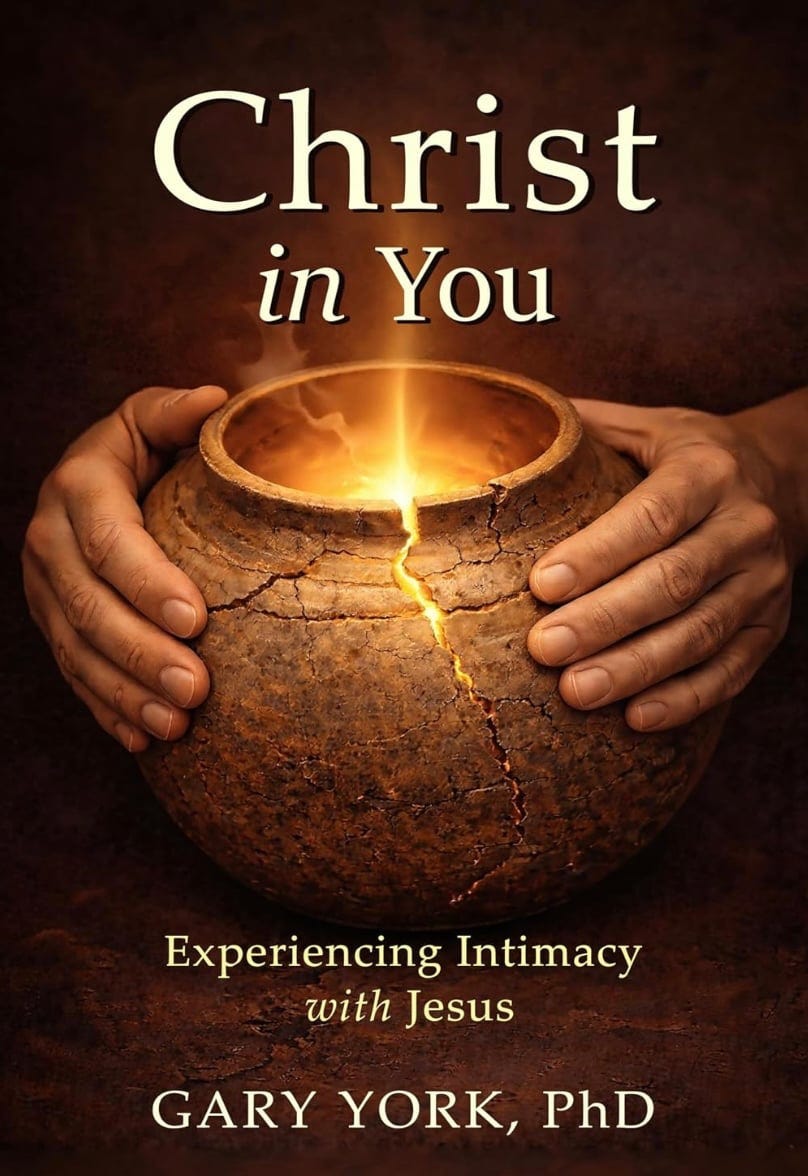
What does Christ in You mean for us today?
Christ in You: Experiencing Intimacy with Jesus
Many Christians long for a deeper, more intimate walk with God, yet struggle to experience His presence in daily life. We believe the right things, try to live faithfully, and still feel alone. But Scripture reveals a stunning truth: Jesus intends to live His life in us, with us, and for us. You were created for a moment-by-moment life with Jesus shaped through spiritual formation.
Read more about Christ in You on Christian Book Finder

“It’s very rare that I read a book and feel that it will change my life.” Adrian Warnock
Read my review of this impactful book
What does Jesus’ resurrection mean for you?
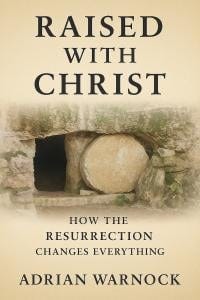
Raised With Christ: How the Resurrection Changes Everything
by Adrian Warnock
https://mybook.to/raisedwithchrist
Raised With Christ explores the historical evidence for the resurrection, why it matters, and how the risen Christ transforms every aspect of the Christian life. This new version includes study guide questions and an afterword by Charles Spurgeon and John Newton, updated into modern English.
Read more about Raised with Christ on Christian Book Finder
Read a free chapter from this book:
A Relationship with the Risen Jesus
A Relationship with the Risen Jesus

This is a chapter from my first book. It challenges us, demonstrating that previous generations of Christians valued an awareness of a personal relationship with Jesus much more than we do. Allow their examples to stir your heart today as you read or listen.
The resurrection really does change everything. Just not all at once.
“Finally, a new generation of readers has a clear and highly readable book on the resurrection of Jesus Christ.”
— Joni Eareckson Tada
“What a refreshing wake-up call Adrian’s fine book provides.”
—Terry Virgo, from the Foreword
Edited Transcript
Adrian
My name’s Adrian Warnock and I’m here with Gary York. So Gary, how did you and I first connect?
Gary
I’m really grateful to be with you today, Adrian. We connected through Substack and I think you may have seen one of my posts about my book. You were generous to decide to read it and spend your time and energy with it. We started a conversation over direct messaging and then that led to, I guess, you finishing the book. Now I’ve discovered you and I’ve read your book about the resurrection, which has been a blessing also.
Adrian
I think it’s probably worth saying right up front, because I know how it is with this. A lot of people only listen to the first few moments. One of the things we want to do today is, in a sense, pull together the message of both books, which incredibly complement each other, I think. I’m sure you probably agree.
For my book Raised with Christ, it has actually formed a series of books that I’m writing under the title Transformed by Jesus. So really that’s almost a direct link with Christ in You, the title of your book.
Gary
Yeah, it is. As I read yours, you actually have a chapter on a relationship with Christ, which ties directly with the theme of my book, which is that Christ in you is about a relationship. That relationship is primary.
What I’ve tried to do in the book is change my perspective and the reader’s perspective to a relational lens. Instead of looking at everything through behavior or performance or some other lens, I want to look at it through the lens of a relationship with the living Christ.
Adrian
You know, I love that. Before we get into too much of all of that, I think it’d be fair to say that an awful lot of Christianity today is more of a relationship with a book, intellectualism, and also with behavior or sin management. As important as those things are, it’s not really what it’s about. It’s about a relationship with Christ.
There is another little twist to all of this, which I guess we’ll get onto in more detail later. I’m just trying to give people a foretaste of some of the things we might address. That is that “Christ” itself can be used almost as a spiritual label. Some people talk about, in certain theological schools, that when Paul talks about Christ, he isn’t really meaning the Jesus who walked around.
But I think quite clearly from your book that is exactly what we’re meaning. Quite clearly from my book, I’ve wanted to focus our attention not so much away from the cross, but through the cross to the resurrection and to the idea that actually the very same Jesus who walked around and so perfectly revealed the nature of God to us.
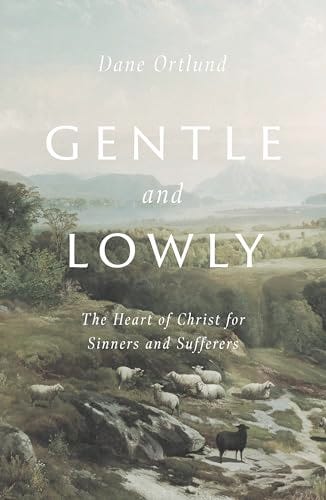
I love that book Gentle and Lowly. I don’t know if you’ve had a chance to read that, but it unpicks who Jesus was. It’s that Jesus in that book. Reading both of these books, Raised with Christ by me and Christ in You by Gary, they actually complement that book as well, because it’s that Jesus that we’re saying we need to have this relationship with, living in us and transforming us in a way that we’re aware of rather than merely assuming it. Have I summarized that well?
Gary
Yes. When I started thinking about a Trinitarian perspective, Father, Son, and Spirit are persons. So what does it mean to have a relationship with a person, even though the Spirit is within us and it’s the Spirit of Christ?
Christ is seated at the right hand of God, but he’s fully present with us through his Spirit. In fact, there are two places in the New Testament where the Holy Spirit is specifically called the Spirit of Christ. So that’s how Christ is in us. He’s not leaving.
That should cause us to be stunned, to be shocked, that God would choose to come and be with us and live in us. He’s available for us. He’s inviting us into his work. He’s not like a genie who’s going to do what we want. Instead, he’s inviting us into the good life, which is the work he’s called us to do and the relational life he’s called us to.
Adrian
It’s absolutely beautiful, isn’t it? I think I’m just going to pull up, if I can, one bit from your book which I hope I can easily find here, because it comes near the end of the book but I think it’s a beautiful bit. It’s the bit that I quoted in my review.
Certainly I’d encourage people to have a look at my review of Gary’s book, or just skip that and buy the book. While I pull this up, both of the books we’ve mentioned, Raised with Christ and Christ in You, are actually available at a remarkable discount. I think it’s something like eighty percent off. Just ninety-nine cents in the US and ninety-nine pence in the UK.
This is a special offer and it’s really in celebration of this interview that we’re doing. It’s only for a few days, so you need to move quickly. If you’ve heard this interview and it’s helped you and you want to get hold of those books, I think most people can afford ninety-nine pence or ninety-nine cents.
There’s a kind of not-too-hidden agenda there. I’m sure Gary would agree. We’d love you to read them. We’d love you to get access to them. We don’t want money to be a barrier in that sense. Amazon won’t let us carry that on forever, but we would ask you, if you do take advantage of that, to consider writing a review on Amazon, maybe even on your own Substack if you have one, or elsewhere on social media.
I think it’s important to understand that in this day and age what you write on social media or on Substack, your likes, your comments, but also your face-to-face comments and recommending a book to someone else, can have a huge impact.
I think it’s fair to say that Gary and I have both got a strong sense of God’s sovereignty at work in this. People often talk about book launches and what I say is that we’re not necessarily trying to launch the book into space or become a bestseller. We’re just trying to get it to the people who need it, the people God intends to reach through it. I don’t know if you want to add anything on that.
Gary
Certainly. That’s a valuable message. The feedback I’ve gotten so far from people who’ve read it has been deeply touching to me. Their lives with Christ have been renewed and restored. They’ve understood a deeper way of walking with Christ.
For me, that’s the impact I want to see. I’d love to see people draw closer to Christ, walk more closely in step with the Spirit, and find new value in the relationship they have with Christ.
Adrian
It’s beautiful. I think that’s the thing. We believe that God takes books and uses them in people’s lives and that they can have an impact. Certainly that’s my experience. It’s something that stirred within me.

We’ll return to most of the things we’re just touching on in these opening minutes later on. For some reason, it makes me think of how sometimes we despise the day of small beginnings. We think a book is only any good if it’s a top bestseller, or if it’s published by one of the big Christian publishing houses.
There’s a place for all of that. But there’s also a place for recognizing what sphere God has given me and what sphere of influence God has given me. Who does God want to read this book?
Sometimes the little thing can make a huge difference in someone’s life, and that’s wonderful. Then sometimes that person makes a difference to others.
I discovered recently a couple of guys who are now theological professors who said they read my book years ago when the first edition came out and that it impacted them. To me that’s great. It’s the knock-on effect that can happen. People read a book, it benefits them, and then that can benefit others.
I do think that as Christians it’s almost our duty now to consider reviewing every book we read and sharing books with people so that the word gets out.
Most people aren’t able to make huge advertising spends. I’m not even sure in the modern environment, where social media is so dominant, that it would be profitable anyway. We’d rather make the book available cheaply so some of you listening can get hold of it at a low cost and, almost as a thank you, encourage you to review it and share it.
I’d like to share one quote from the book, and then I’d like to take a step away. I think this is quite a good way to end this initial segment.
“Imagine Jesus himself knocking at your door this morning. You swing it open. You’re overjoyed at his arrival. You cancel your plans and you’re eager to spend the day with him. You call your friends and neighbors to come for dinner. Jesus has come to my house. And yet this illustration exposes how little we grasp of Christ in you.”

Could you elaborate on that quote a little bit and then we’ll move on?
Gary
Well, I think in your review of the book you mentioned that the fullness of Christ is represented to us.
I talk in the book about how Christ in you doesn’t mean we get a small part of Christ or a portion of Christ. In Ephesians, Paul prays that the fullness of Christ would be present in the people he’s writing to, and to us who are reading what he wrote.
One of the things I constantly struggled with in the book is how to shake myself and my readers out of our stupor, this dullness we have toward the amazing and beautiful truth of the living Christ, who is fully God, being present in us and for us all the time.
To me, I just tried to find ways of thinking about how we remove the blinders we have on to this great truth and maybe communicate it in a new way so we can begin to realize the treasure we have with us all the time.
Adrian
Yeah, I love it. One of the things that I’ve kept coming back to over the years is something Jesus said that’s almost strange. He says, paraphrasing, “I’ve got to go to heaven because if I don’t, I can’t send the Holy Spirit to you. I can only send him when I’ve ascended. And it’s better for you that I go.”

The way I put it in my review was that it’s actually supposed to be the case that there are millions of mini-Christs. So there’s Gary, there’s Adrian, there’s whoever is reading the book, whoever is listening to this talk. The idea is that we’re meant to be mini-Christs, containing Christ within us, but also manifesting him to others.
My concern, actually, Gary, is that I’m not convinced that at least some parts, maybe even the majority, of the church today really grasp that. I don’t know that we reveal that gentle and lowly, meek, kind, loving Jesus to each other, or even that we fully understand him ourselves. What do you think?
Gary
I think that idea of being representatives of Christ and ambassadors for Christ, having Christ and the Holy Spirit in us, is a beautiful and powerful message. People should either be attracted to Christ because they see the winsome life he lived, now living through us, or completely repelled like the Pharisees who hated Christ and wanted to crucify him because they couldn’t stand his holiness in their presence. So there will be a variety of reactions. But yes, we should be attractive to people who are looking for life, people who want to say there must be more than what I’m experiencing right now.
Adrian
That reminds me of a verse in 2 Corinthians I was looking at this morning and meditating on a little bit. It talks about us being the aroma of Christ, a fragrant perfume. To some we’re an aroma of life, whereas to others we’re an aroma of death.
I think there are certainly some wings of the church today who seem almost ecstatic about being that aroma of death. They magnify that and work toward that. It’s all about what we’re against and who we’re against. Whereas I think there’s a winsomeness and attractiveness about the aroma of Christ that perhaps sometimes we’re missing.

Gary
Yeah, we live in an age where the church itself is split. Some of that is driven by the cultural environment and the spiritual warfare we’re seeing. But as we walk with Christ and recognize Christ in you, we’ll be able to join him in what he’s doing rather than pursuing our own agenda. When we’re doing our own thing, Christ is not in that. But when we join him, we can do the things he’s trying to do in the world around us.
Adrian
He left the ninety-nine sheep to go gain the one. I think there’s something about that in terms of our evangelism and having love for people. At least not leading with, “God hates you,” but leading with, “God loves you.”
Gary
Absolutely. That’s the central theme of the book. Love for Christ is the kind of relationship that he’s drawing us into.
Adrian
And I did warn you that at some point I was going to bring John Newton up. My whole plan for the day has kind of gone a little off-kilter, but we’ll come back to some of the other things I wanted to discuss. There’s a passage from John Newton that really captures the heartbeat of your book.
I know you’ve read some of him and love some of his hymns, and also some of the Puritans. He belongs to that whole stream of Christianity that has historically been very experiential.
So I’m going to read this:
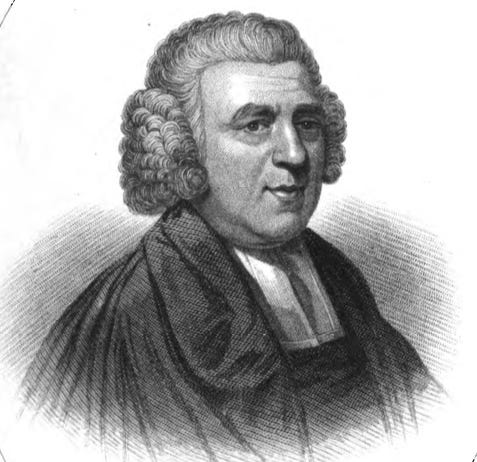
“Are not you amazed sometimes that you should have as much as a hope, that, poor and needy like you are, the Lord thinks of you? But do not let what you feel discourage you. If our Physician is Almighty, our disease cannot be desperate. If he casts no one out that comes to Him (John 6:37), why should we fear?
Our sins are many, but His mercies are more. Our sins are great, but His righteousness is greater. We are weak, but he is powerful. Most of our complaints are due to unbelief, and the remainder of a legalistic spirit. These evils are not removed in a day.
Wait on the Lord, and he will help you to see more and more of the power and grace of our High Priest. The more you know Him, the better you will trust Him. The more you trust Him, the better you will love Him. The more you love Him, the better you will serve Him. This is God’s way. You are not called to buy, but to beg. Not to be strong in yourself, but in the grace that is in Christ Jesus.
There is one subject which can never be exhausted, the love of Christ. This is the fountain from which all our spiritual blessings flow, and the ocean to which they all lead. The love of God towards sinners is found in Christ Jesus our Lord. It is treasured up in Him. It is revealed in Him. It is communicated through Him.” Read more in Amazing Grace: How Faith Grows in the Human Heart
Don’t you think that’s wonderful?
Gary
Yeah. Reading some of the writers about their relationship with Christ is so inspiring. I have a book next to my bed and I read one of the prayers of the Puritans before I go to sleep each night. The prayers are so powerful and they point us to this relationship with Christ that is available and that the church has been writing about for two thousand years. Yet recently we seem to have lost this relational aspect of our life with Christ.
Reviving Hymns for a New Generation

One of my favorite series of articles that predates this Substack is what I call “Revive a hymn”. The philosophy is simple. There are old hymns that, at least in some circles of the church today, are not much used but should be.
Adrian
Yeah, I think we should talk a little more about that. One of the challenges for some people reading these older writers is that they’re written in older English. I should probably confess that what I just read was slightly updated into modern English by me.
If you’re interested in John Newton’s writings, they’re available free online. I’m slowly working my way toward a book I’ve partially released called Amazing Grace: How Faith Grows in the Human Heart. It traces Newton’s story.
You put it beautifully in your own book. You talk about the jar that is broken and then remolded. I wanted to get beneath the hood a little bit. Can we talk about your background and how you, broken vessel as you are, came to write this book? Who are you? Where are you from? Where are you living? All that sort of thing.
Gary
I live in the United States, in the Birmingham, Alabama area. I have a wife and two sons. For most of my career I’ve been an engineer and a software entrepreneur. I’ve founded a number of software companies that have had success, and that’s really where I’ve lived my life. I have a PhD in electrical and computer engineering, so I can definitely geek out with the best of them. Later I became a software entrepreneur and that’s how most people know me.
I always tried to live my entrepreneurial life under the umbrella of the kingdom of God. I tried to treat people as image bearers and lovingly and so on. But ultimately the world of entrepreneurship is one where relationships are often transactional. I’ll help you, you help me. What can I do for you? That always bothered me.
What led me to write the book was that I’ve been a Christian and been in church for many years. Each year I would pick a verse or theme and think about that for the year. I wanted to go deeper into one idea.
About six or seven years ago I chose Colossians 1:27, which ends with, “Christ in you, the hope of glory.” It didn’t take long before I thought, “Wow, that seems pretty amazing, what that actually means.”
I don’t think my life, nor the lives of most of my Christian friends, seemed to reflect the reality that the holy God who created the heavens and earth, who creates matter out of energy, who came to us in Christ to draw us back, is with me and in me all the time. That really captured me.
One year became two years and three years and four years, and eventually I was led to write a book about it, to tie up this season where God was teaching me more about what it means. I’ve spent a lot of time studying theologians and what they wrote about what they would typically call union with Christ. But I think my perspective was unique because I’m a person sitting in the pew. I’m not a theologian. I don’t talk in theological language and I don’t think like a theologian.
As an entrepreneur, I often have to think about problems differently. Innovation and creativity are often rewarded. If you don’t bring a product to market that’s differentiated, you’re often not going to succeed. Not that I’m trying to create something new about Christ. Instead, I’m trying to recover something that’s been there all along, but hasn’t had a light shone on it in recent years.
Many theologians have been writing about union with Christ over the last twenty, thirty, or forty years, but there haven’t been very many books written for ordinary believers. I wanted to share what I felt God had given me and begin putting it on paper. It was impactful for me too. As you begin to write about something, it forces you to think more clearly. I think I was just as impacted as some of my readers have been.
Adrian
That’s beautiful. I think it’s interesting because you talk about creativity. Obviously there’s nothing new under the sun, and if something is totally new it’s probably heretical. But there has been a pattern throughout church history where things get lost and then recovered.
Approaching the Bible from a slightly different angle can sometimes be revelatory. I sometimes call books like yours “middle-brow” books. I’m not even sure if that’s a technical term or one I’ve made up. There are lots of Christian books that are beginners’ books. They assume you know nothing. Someone who was thirteen, or even younger, could read them and benefit from them. They’re good books and they’re important.

Then you get books written by theologians for theologians, full of specialist jargon, Greek words, endless references, and all the rest of it. They’re valuable too, but they’re often difficult for ordinary Christians to read unless they’ve had formal theological training.
You don’t have a theological degree. I don’t have a theological degree. John Newton didn’t have a theological degree. Charles Spurgeon didn’t have a theological degree. Dr. David Martyn Lloyd-Jones didn’t have a theological degree. He came at things as a doctor rather than as a theologian. I’m not saying there’s anything wrong with theological degrees. All I am saying is that approaching the Bible in a slightly different way can sometimes help us see things afresh.
Gary
That’s encouraging to me. I’ve often felt, with respect to this topic, that somehow I must be missing something. So I had a lot of theologians work with me during the writing process to make sure I was on track and not saying anything inconsistent with Christian orthodoxy.
I felt a bit like Moses in the desert. He was out tending sheep, doing something completely different, and then God called him to something entirely new.
I never imagined I would write a book about a Christian topic, but this felt like a calling. It felt like a message I’d been given, and something I had a responsibility to share with my community, because every gift we have is not for our own benefit but for the church.
Adrian
I think there are a few reasons why this has been lost, and perhaps we can explore some of them together. One reason we’ve already touched on is the intellectualization of the church. I think that has become more and more pronounced. Do you agree?
Gary
I think so. My church tradition tends to focus on having the right doctrine, and we’re very good at that. I’m grateful for it. It’s a blessing to be among people who care deeply about truth.
But I’m also grateful that my church emphasizes there’s more to life than simply having the right doctrine. It’s about having a whole life. We are embodied creatures, and we need to be living a holistic life based on the truth we proclaim.
Speaking about historical writers, one story I tell in the book involves a well-known Christian leader toward the end of his life. After he had spoken, someone asked him what was the most important thing he had learned in all his years of Christian leadership. He thought for a few moments and then said, “Jesus loves me, this I know, for the Bible tells me so.”
That struck me because it’s simple, but it’s true and grounding. It reflects the kind of knowing that J. I. Packer talks about in Knowing God. It’s not merely intellectual knowing. It’s experiential knowing.
We have to know him in the way we live. We have to know him relationally, through ongoing conversation, through joining him in what he’s doing. That had a big impact on me. Christianity is not merely about ideas or doctrines. That’s a dead way of thinking about it. It’s about a living, vital relationship with the indwelling Christ.
Adrian
That’s beautiful. My theological nerd senses started tingling there for a moment. Did you ever hear Karl Barth speak?
Gary
I did not, but I know he said something very similar. Someone pointed out to me while I was doing reference checks for the book that Karl Barth had made a similar statement. I first heard it quoted in relation to Packer, but I believe Barth said it first. It makes it even more meaningful that two towering thinkers like Barth and Packer would arrive at the same conclusion: “Jesus loves me, this I know, for the Bible tells me so.”
Adrian
Of course neither of them wrote the hymn, so it’s entirely possible they arrived at it independently.
Another book I’m working on is called The Traitor Within. It’s partly inspired by the television show The Traitors, which has been hugely popular over here and around the world. It’s about deception from within. One of the things that led me to that title was Jeremiah 17:9: “The heart is deceitful above all things.” The whole context is really about the fact that only God can deal with that condition. Only Christ in us can gradually change us from having disordered desires.
So I came up with this title, The Traitor Within, and naturally thought I was terribly clever. Then I discovered a psychotherapist had written something similar. And before that another Christian author had used this title. Then some older books. Then I discovered that a Puritan, quoted by Spurgeon, had used the same phrase centuries earlier!
You can react to that in two ways. You can be disappointed, or you can conclude that maybe there’s something really true here. Some ideas are so obvious and fundamental that people keep rediscovering them generation after generation. Christ in you feels like one of those ideas.
You don’t major on this theme in your book, but could you talk a little about human sinfulness? About understanding how needy we are and how gracious Christ is? That’s the way Newton often framed things.
Gary
Certainly I hope the book presents an exalted Christ and a needy human being. I think about John the Baptist saying, “He must increase, but I must decrease.”
There’s an illustration that has been helpful to me. You might be indoors looking at a white sheet and think it looks reasonably clean. But if you carry that same sheet outside into bright sunlight, suddenly you see all the stains and discoloration. The closer we draw to the light, the more every stain shows.
That has been very impactful for me. When I read many Christian writers throughout history, I see that those closest to Christ tend to become increasingly aware of their own sinfulness.
Often people minimizing sin are saying, “I’m not really that bad.” But I think what that often reveals is that they have not yet come face to face with the living Christ, who shines light on us and shows us our tremendous need for a Savior to redeem us and transform us into his image.
Adrian
Would you agree that, in some cases, that’s part of the reason for the tragic falls we sometimes see? Someone gets placed on a pedestal, perhaps not by themselves but by others. Maybe one book becomes successful, and suddenly they’re treated as a Christian celebrity.
I’m not sure that’s healthy. It hasn’t happened to me, and perhaps that’s a blessing. Some people do know who I am and that’s nice, but if you’re not careful even a little recognition can have a big effect on your pride.
The real danger comes when people begin to assume that someone would never do certain things. Eventually they begin to believe it themselves. Instead of becoming more aware of our brokenness and our capacity for sin, we become overly confident. We start pointing fingers.
Meanwhile trouble is brewing underneath because genuine transformation hasn’t happened. We have to cooperate with God in that process. If we don’t, transformation won’t happen in the same way. Then sometimes all of that hidden reality is exposed through a major fall. I do wonder if that’s part of the problem.
Gary
It reminds me that we need inside-out transformation. The whole Sermon on the Mount is about the inner life. That’s why Jesus said our righteousness must exceed that of the scribes and Pharisees. Their external righteousness looked impressive, but internally their lives had not been transformed. They were doing things for show or out of duty rather than out of love.
When leaders fall, often they haven’t invited Christ into those broken areas of their lives. They haven’t allowed him to heal and restore the parts that need attention. They end up leading lives of hypocrisy.
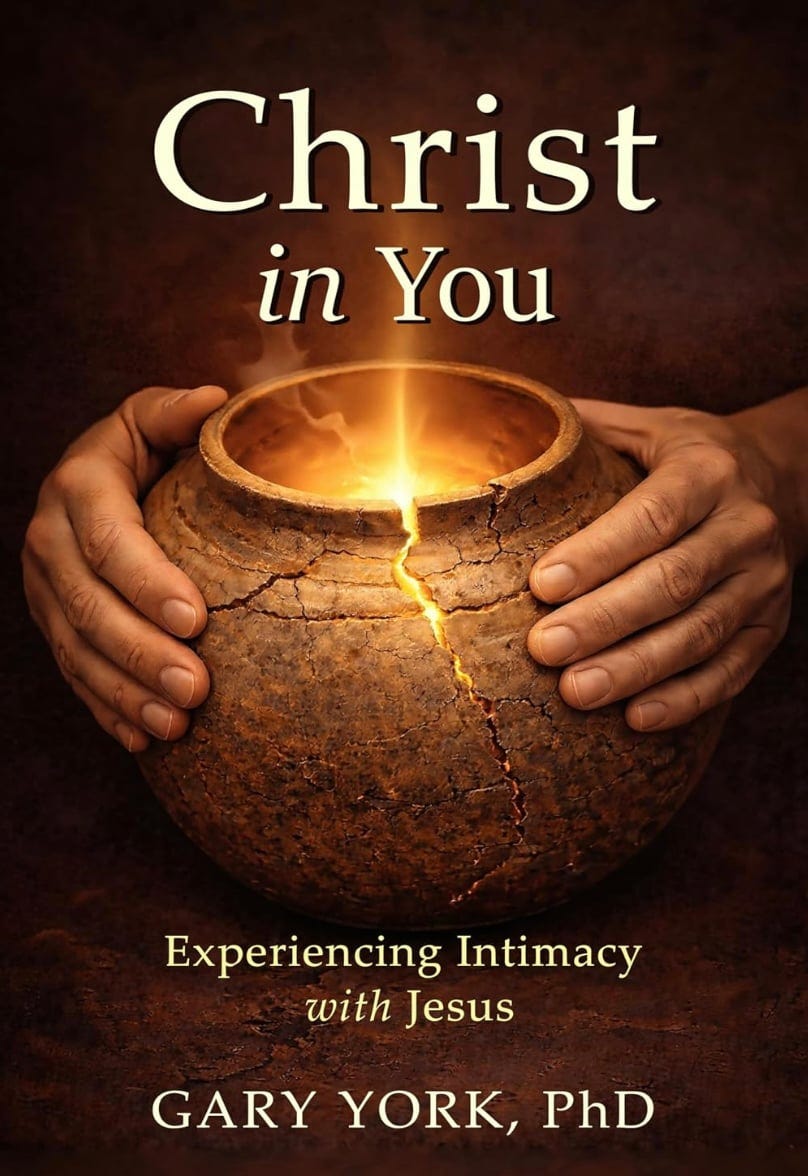
In the book I talk about kintsugi, the Japanese art of repairing broken pottery with gold. The gold doesn’t hide the cracks. It restores them and makes them beautiful. That’s a beautiful picture of what Christ does in us. If we hide our brokenness and weaknesses, we drift toward hypocrisy, which both the world and Christ rightly reject. Instead, when we invite him in and acknowledge our brokenness, there can be humility. We become willing to talk about our weaknesses and show how Christ has redeemed them. That reminds us of Paul, who spoke about Christ’s glory being displayed through weakness.


Adrian
I think that’s exactly right. And I think another reason we’ve lost some of this emphasis on Christ in us is that we don’t really want to be open anymore. You’re an entrepreneur, and entrepreneurship has become one of the dominant models in modern culture. There are wonderful things about that, but there can also be a tendency to project success.
I’ve been struck over the years by biographies. I haven’t read as many recently as I once did, but I used to read quite a lot of them. The older the Christian biography was, the more honest it seemed to be about the person’s weaknesses.
When you read about people like Whitefield and Wesley, you see their faults. You see their disagreements. You see their blind spots. Those things aren’t hidden away. They’re right there in the journals, the pamphlets, and the biographies.
Spurgeon is another example. He wrote openly to his congregation about his physical problems and about his depression. It saddens me a little that on Substack there’s a fellow who feels he must write anonymously as “The Depressed Pastor.” He seems like a lovely man, and his writing is helpful, but he’s chosen anonymity because it gives him an opportunity to talk honestly about depression. Maybe we are falling behind previous times in terms of acceptance completely understand why he feels he needs to do that. But isn’t it sad? Two hundred years ago, people like Spurgeon openly said, “I struggled with terrible depression. I wondered if I’d ever preach again.” Yet they also testified that Christ met them in those struggles. Why don’t we talk about our weaknesses more?
Gary
Obviously many of those decisions are personal decisions for individuals. But I think the more we see Christ and draw close to Christ, the more we realize it’s about him and not about us. If we can be used as broken vessels, that’s actually the imagery on the cover of my book. It’s an old, rusty, broken vessel, but there’s light inside it and the light is shining through. That’s the message of Christ. He can use us in our weakness. He does use us in our weakness.
When we try to hide our weakness, when we put a coat of lacquer and paint over our brokenness, his glory often can’t shine through because we’ve chosen to conceal it. I think he’s more glorified when we agree with him about our own condition. We acknowledge our neediness. Obviously Christ can use our gifts. But I think he can also redeem and use our weaknesses for his own glory.
Adrian
Partly because of my background as a psychiatrist, partly because of my involvement as a volunteer pastoral leader in a church for around twenty-five years, and partly because of my own lived experience of chronic illness, I’ve become more passionate about helping people find hope and compassion, and then experience healing.
I put those in that order deliberately. Healing often comes later. I’m not talking about an instant fix. It can take a long time. My blood cancer diagnosis and the treatment that followed really devastated my life. I had to retire medically. It stopped me writing for a long period. Even now, I can’t write as much as I’d like because my brain gets foggy.
I can’t work. There have been months when I couldn’t even get to church. There were periods when I couldn’t focus enough to read. There were also relational difficulties connected to all of that.

Because of those experiences, I’ve become increasingly interested in asking my guests a particular question. I know we talked about this in advance.
What’s the most challenging thing you’ve personally faced, or perhaps faced as a family, that you feel comfortable talking about? And how has Christ met you in the middle of it, without turning it into a simplistic success story?
Gary
I’ve certainly lived what most people would regard as a privileged life, and I’m very grateful for God’s blessings. My parents stayed married their entire lives. I’ve had a good education. I’ve had success in business. My health is good. In many ways I’ve been blessed.
But I think the fact that God invited me to write a book like this actually points to one of my weaknesses. Most people would not describe me as someone who’s highly relational. I’m an introvert. Many of my relationships in the past have been transactional. We moved around a great deal when I was growing up, so I never established those lifelong friendships that many people have.
And now Christ is teaching me that there’s a relational dimension to being with him that can transform my life. He’s helping me understand my relational weaknesses and the ways I haven’t always treated people as Christ would treat them. At the same time, it’s been transformative because I’m learning to interact with people differently. I see them as image bearers, people of immense worth in the eyes of Christ.
It’s a little like Moses. He had a speech problem, and yet God called him to be a spokesperson. I feel some similarity there. Moses was also old, and now I’m writing a book at what many people would call an old age.
Adrian
You’re not that old, Gary. How old are you, if you don’t mind me asking?
Gary
I’m sixty-seven. I’m on the other side of Medicare.
Adrian
One of my good friends is a pastor in his seventies and he’s still traveling the world and speaking on university campuses to see students saved. So there you go. God can still use older people.
Gary
I’m grateful he’s not through with me yet. I think the important thing is that you can still have a calling and a mission even when you don’t have experience doing that particular thing.
As you mentioned, I’m not a theologian. Nobody would have predicted that I would write a book like this. Nobody would have predicted it would be well received by theologians as well as by ordinary Christians. It’s really a gift. It’s been a delight, but I feel it’s beyond me. It’s something I could not have done without Christ in me.
Adrian
Let’s be completely honest for a minute. The stereotype of computer engineers is not that they’re relational geniuses. In some cases people assume they’re socially awkward or perhaps somewhere on the autistic spectrum. Whether that’s true or not is a separate issue, especially for people of our generation when those things weren’t discussed the way they are now.
But there is certainly a stereotype that scientists and engineers are among the least likely people to write a book about relationships with Christ. So in that sense God often chooses the weak things of the world.
You do have one advantage over the engineer in The Big Bang Theory, though. You actually have a PhD. I didn’t even know engineers could get PhDs. Are you a Big Bang Theory fan?
Gary
I am. Sheldon Cooper is certainly the caricature of someone who doesn’t understand healthy, loving relationships. Hopefully I’m on a path of recovery. I may not have started where Sheldon was, but I’m trying to learn.
There’s a quote by Lewis Smedes that probably summarizes much of what the book is about. The basic idea is that human life is ultimately about relationship. That’s really the conclusion I came to as well.
We need to shift our lens to a relational lens. Just as I’m wearing glasses so I can see clearly, I want to put on the glasses of a relationship with Christ. When I do that, everything around me changes. I begin to see you and the readers and the listeners as image bearers of immense value. They become recipients of God’s love. And because Christ loves them, they’re also people I’m called to love.
Adrian
Looking back across your life, has this issue of not naturally being highly relational had a negative impact on you? Or has it actually helped your career in some ways? Because that’s the stereotype, isn’t it?
Gary
I think it helped make me a successful entrepreneur. My mother tells a story that when I was very young, maybe six or seven years old, she hadn’t heard from me for a couple of hours. With children that’s usually alarming. She eventually went upstairs and found me completely absorbed in building things with Lego. I was creating elaborate structures and imaginative designs.
That reflects a gifting God seems to have given me. I can focus intensely. I can think creatively. I can stay with a problem for a long time. Those are qualities that make a good entrepreneur.
What makes a good entrepreneur, however, isn’t always what makes a good friend. That’s something I’m still learning. Paul said he became all things to all people so that he might save some. I’m trying to learn how to become a better friend so that I reflect the friendship Christ has shown to me through his death and resurrection.
Adrian
That’s really precious. It also connects to another reason I think this whole Christ-in-you reality has been damaged over the last century or so, the increase in loneliness and isolation. More people live alone than ever before, and that has all kinds of negative effects on people. Even when they don’t realize it, those effects are there.
For some people during the worst of the COVID time, being allowed to live on their own and not have to interact with other people at all, they thought that was a good idea. But the damage that has had, especially to people who didn’t have good relational networks that they could pick up again afterwards, has been quite remarkable. That we don’t necessarily really realize.
Because of course, one of the things you say in your book, which I think is lovely, is that English is a bit of a problem because when we say Christ in you, and up to this point we’ve mainly sort of focused on it as a sort of individualistic thing.
But as you say, it should really be “Christ in y’all,” to use the Southern rule. Or I think in Northern Ireland, Scotland and some other places on both sides of the Atlantic, they would talk about “Christ in yous.” In other words, a plural form of you.
And these relationships with other Christians. You talk about that quite a bit in the book about how Christ is revealed to us, I guess, going back to that mini-Christ idea that I mentioned right at the beginning. So could you talk a little bit about that? Do you agree that loneliness and isolation has actually had a knock-on effect on our Christian experience?
Gary
Yeah, no doubt that Christ in you is transformative not only for our own relationship with Christ. He draws us to himself, invites us to himself individually, goes after the one and leaves the ninety-nine. But in fact it is plural.
When I was in Pittsburgh, they would have called it Christ in yunz. But yeah, everybody has their local phrase for plural you, but it is plural you. And when Paul says that, he’s talking about the church. I think it’s critical that we remember that.
We are never alone. We are invited into the body of Christ. I love the analogy of the body of Christ because we each have a part to play. Our gifts are important and we each can play that role. And when we choose isolation, we’re choosing a path that’s inconsistent with the Christ who’s come to us and is dwelling with us.
One thing I’ll say about Christ in you and loneliness is that I share in the book that many times I would feel like I was alone in the middle of something. Oftentimes entrepreneurial leaders talk about the loneliness of leadership. But what I now understand, and what I didn’t see at the time, was that Christ in you is also... you’re never alone with Christ in you. We always have the indwelling Christ.
The loneliness I felt was a false loneliness that denies that Christ is standing at the door and knocking. In Revelation 3, he’s knocking at the door to the church. He’s not talking about non-Christians. He’s talking about Christians in that example. And so when we shut out Christ, we’re closing the door of our life to him. He’s knocking and inviting us to return to him every moment. And that’s this continual return to him in our sin, but continual turning also in our inattention.
And in the book I mention a lot about attentiveness. It’s the nature of the relationship that we can have with him. Are we attending to him? Are we turning to him constantly and remembering that he’s present?
Adrian
We’re never alone.
Gary
And not only are we never alone individually. He’s always with us. But we’re never alone with individuals either. Where two or three are gathered, he’s with us. But Christ in you is incredibly important for drawing us into relationship with the church and for giving us the power to share the good news for those outside the church.
Adrian
No, that’s beautiful. But I think this word attentiveness is quite interesting and quite important. Both in terms actually of being attentive to other people. Also, I guess, in terms of being attentive to ourselves and what we are thinking and feeling. And we talked a little bit about that earlier, didn’t we, about the need for us to know ourselves. I mean, this is the way Newton would put it.
And unlike many modern psychology theories, or certainly the pop versions of them, which try and stress self-esteem and how wonderful you are, he would say, no, you’ve got to understand how awful you are.
And yet there’s a sort of acceptance that comes and yet a challenge to change. So it’s like attentiveness and acceptance also. Before you get to sort of trying to even change yourself, let alone anyone else, there has to almost be an acceptance of, look, this is the way it is.
And a need to then turn our attention, as you put it, to Christ. But isn’t there a lot in our world in the last hundred years or so that stops us from being attentive to anyone, neither ourselves, nor other people, nor God?
Dopamine dashes from our phones and all of that. And just charging around from place to place at a speed. I was thinking about just things like, what would it have been like to ride on a horse from one city to another over several days? You would have had that opportunity to disconnect. You’d been forced to reflect. It would have been almost impossible not to reflect. And yet sometimes we can spend fifty years and never really stop.

Gary
Yes, I think the speed of modern culture is a huge impediment to our relationship with Christ. People talk about doom scrolling. I reference a book about The Three Mile an Hour God. That talks about how Jesus walked from place to place and that the speed of walking is about three miles an hour, and that slowness allows us to engage with Christ. It allows us to focus our attention on something other than our phones or the hurry of our life.
I think there is a movement now in parts of the Christian church to recognize the importance of slowing down, of the Sabbath.The Sabbath is being emphasized by, we need a day where we have a Sabbath for our phones, we have a Sabbath from technology, we have a Sabbath from work, and that these practices can allow our attention to turn back to Christ.
That doesn’t mean that we can’t be attentive to Christ in the busyness, but if we never have times away from the busyness to restore, to have focused attention with Christ, then I think we’re not strengthened to be able to continue to be attentive to Christ even when things get busy and when our lives get hectic.
Jesus often went away to lonely places to pray, and we would be foolish to think that we can live our lives well when we don’t do the same.
Adrian
Jesus seemed to have a kind of interesting balance in his life. It was a pretty demanding life at times. People would press around Him, and the crowd would be so pressing and then someone would touch the hem of His garment and He knew because he could feel the power going out to heal.
But the rest of the disciples around him were like, “Look, you might as well be on a London Underground tube right now. Everyone’s touching you. What do you mean someone’s touched me?” And the busy, busy, busy preaching to five thousand, all of that running around.
And yet there were times when he took his disciples away to focus attention with them. There were times when he took just two or three, or even one of those disciples away, to focus attention with them. And as you rightly say, there were many times where he went away just to focus on Christ.
If we’ve lost the idea of true relationship and true friendship, then is it any wonder that we can’t be friends with God? So maybe that’s part of the reason why we’ve lost some of this Christ-in-you thing, because actually Christians today don’t really talk much about our relationship with God with each other. But we almost don’t really talk much about our hearts with each other anyway. We don’t bear our hearts with each other very much as often.
Gary
Yeah, I think those are important points. Dallas Willard wrote a tremendous, well-respected book called Renovation of the Heart. The idea is that we need to go deeper than just the surface is being recovered by a lot of Christians these days. Many people are recognizing that life is about more than just the surface things that we see. Instead, we need to open our lives, our interior lives, for Christ to explore and work with us in all those broken areas of our inner lives that need healing. And if we don’t, then we end up either being hypocrites that maybe later have a fall and are exposed, or we fail to live out of the power that he wants us to live out of.
And I wouldn’t claim that we can be perfected in this life, but we can receive substantial healing in this life. When we agree with God about our own sinfulness, about our brokenness, about the hurts that we’ve received, then we name them and we recognize them. And then we invite Christ to heal us in those places. Then he is the great physician and he will come in and work with us on bringing that substantial healing.
Adrian
And then I think there was something you mentioned in the book a bit as well, especially towards the end. I think there’s one particular chapter that focused in a little bit on some of the practicalities of what it looks like to have a relationship with God. And you started talking a bit about meditation. I think some Christians kind of recoil against that. But one of the reasons for that is because there’s this idea that mindfulness and meditation are somehow a Buddhist thing.
Although a lot of secular people are now getting really into this idea of meditation and they’re trying to strip away some of the Buddhist ideas. But what’s interesting is actually the first mention of meditation historically wasn’t with the Buddhists at all. It was a few hundred years before them with Isaac meditating in the fields. But there’s no sort of, “let’s just explain what this amazing thing called meditation is.” It was just an assumption that he was meditating because that’s what you do.
And of course in the Psalms there are things like, “Be still and know that I am God,” and all of these kinds of things.” I have calmed and quieted my heart.” Can you just talk a little bit about that and what we can learn from the mystics and contemplative Christianity and meditation practices of monks? I mean, you mentioned some monks and things, don’t you, in your book?
Gary
Right. Well, I think Christian meditation is different than other non-Christian forms of meditation in that we’re not trying to empty our minds, but we’re trying to fill our minds with Christ and with the Word of Christ. When I talk about meditation, I’m talking about it the way the Psalms do. In fact, Christians who are wary about meditation are wary about the Bible because Scripture tells us to meditate on the Word of God. But we meditate on him. We’re thinking deeply about it.
I think about it like you’re savoring your food. You put a delicious bite of food in your mouth and you just chew it slowly and you savor it. You think about the different flavors and enjoy it. And in the same way, the Bible is a love letter written to us by God. It’s for us and for our benefit.
And when we consume it, we shouldn’t just consume it quickly, like we were talking about earlier, but you consume it slowly. You may go over the same thing two or three or four times and you think about each word and you think about it in context. And all these things are ways of beginning to understand what that Scripture is saying, so that it can become part of you. You’re not just trying to consume something and get it done as quickly as possible, but instead you’re allowing the living Word of Christ to change you and the sword of the Spirit, the Word of God, to impact your life.

Adrian
That’s interesting because you just mentioned the Spirit and the Word in the same breath. Throughout my Christian life, it seems that many churches have been perceived as either “Spirit churches” or “Word churches.”
On one side you have churches that emphasize experiencing God, charismatic gifts, worship, and encounters with God’s presence. Some people from those backgrounds would be happily saying amen to parts of our conversation. But sometimes, if we’re honest, the focus can shift from Christ himself to experiences, feelings, worship atmospheres, or particular manifestations.
On the other side there are churches that focus heavily on doctrine, theology, and careful Bible teaching. We’ve talked already about the strengths of that approach, but also some of the challenges. I remember R. T. Kendall, or perhaps it was Jack Hayford, speaking at our church years ago. One of them commented that our church seemed to value both Word and Spirit.
I’ve always wondered whether one reason we’ve lost some of this emphasis on Christ in us is because of a reaction against certain excesses within charismatic and Pentecostal circles.
A hundred years ago, before those labels really existed in the way they do now, experiential Christianity was simply Christianity. People expected to know God personally and experience his reality. I wonder whether some of the polarization has caused us to lose something that used to be normal.
Would you agree?
Gary
I certainly see different parts of the church emphasizing different aspects of Christian life. I also think it’s possible for people to forget the giver and focus on the gifts. If we’re constantly pursuing experiences and seeking more experiences, we can end up making those experiences an idol. We become more interested in the gifts than in the one who gives them.
That’s one reason why the reality of Christ in you can be so transformative. It redirects our attention away from the gifts and back to the giver. It turns us toward a relationship with the indwelling Christ.
Another thing I’d mention is that we live within an experiential reality. The kingdom of God is real. God is real. We live in a reality that includes him. Theology is our attempt to understand and describe that reality. Theology matters deeply, but it is describing something that actually exists.
Because we live in that reality, we are going to have experiences. When our theology is wrong, or when our behavior contradicts what we believe, we run into difficulties. We experience the consequences of sin and brokenness. Relationships suffer. Families suffer. We suffer.
So I think it’s important to recognize that experience itself is unavoidable. Christ in you means that those experiences can be shared experiences with the indwelling Christ. The point I’m trying to make in the book is to join him in what he’s already doing.
If we’re off doing our own thing, we’re going to collide with reality in painful ways. But when we’re working alongside the indwelling Christ, we’re participating in the kingdom of God. That doesn’t eliminate suffering. Scripture promises that there will still be trouble. But the nature of that trouble changes. We are suffering in the context of participating in God’s work rather than merely suffering because we’re pursuing our own agendas.
We will have experiences. But if we make experiences themselves the goal, our focus may be misplaced. If we focus on Christ, experiences will come in their proper perspective.
Adrian
That’s very helpful. We’re probably going to need to start drawing things toward a close. I wanted to share a little of what I’ve personally gained from your book.
I’ll point people to my longer review, but what struck me most was that I found the entire book deeply stirring on a spiritual and personal level. For a long time I couldn’t read books at all because of my health difficulties. These days I read a fair number, but often I read selectively. I move through them quickly and look for particular ideas.
With your book that wasn’t my experience. I’ve highlighted around one hundred and fifty-eight passages, and many of those quotations have already appeared on Substack. More of them probably will. I found myself challenged anew toward a deeper relationship with Jesus. I suspect that’s exactly what you’re hoping readers will experience. Maybe you could comment on that, and then tell us what you’ve gained from reading Raised with Christ.
Gary
Thank you. I’m deeply humbled by the feedback I’ve received. A few times every week someone reaches out and tells me they’ve been encouraged by the book or by one of the quotations. Some people tell me they’re reading very slowly because they don’t want to miss anything.
I’m grateful for that. The book has only been available for a short time, but I’m thankful for whatever God chooses to do with it. I’m trying to hold it with open hands.
As for your book, I found it very valuable. You have a chapter on relationship with God that particularly stood out to me. You also introduce readers to a number of historical Christians who lived with a strong awareness of Christ’s presence.
That was helpful because I also have a chapter discussing Christians who cultivated a conversational relationship with Christ. Several of the figures you mentioned were unfamiliar to me. I was grateful to learn from them.
And of course your emphasis on the resurrection is very important. You’re focusing on sanctification and on our daily life with Christ. I felt that your book lays an important foundation that helps readers understand the kind of ongoing relationship with Christ that I’m describing. In some ways you’re laying the foundation and I’m trying to build on it. I think the two books work very well together.
Adrian
Yes, I think that’s right. The Christ who lives in us is the same Jesus of Nazareth who walked the roads of Galilee, healed the sick, showed compassion, taught truth, and loved people. He’s the one who was crucified and who rose again.
After all, if he’s still dead, he can’t very well be living in us. That’s one of the reasons I think the resurrection needs more emphasis than it often receives.
One of the arguments I make in my own book is that if we don’t emphasize the resurrection of Jesus, perhaps it’s not surprising that we don’t emphasize Christ in us either.
Gary
Certainly we need to take account of the whole witness of Scripture. As you’ve pointed out, the resurrection demonstrates God’s triumph over death. The power of that victory is now shared with us. That’s an incredible gift. The good life God offers is available because of the resurrection. I’m grateful you’ve emphasized that reality and directed people’s attention toward it.
Adrian
As I mentioned earlier, if you’ve enjoyed this conversation, please do subscribe, share it, and pass it on to others. As we talked through things, a number of themes emerged. We discussed the intellectualization of Christianity. We talked about relational breakdown. We talked about loneliness and isolation. We discussed reactions within different church traditions. Is there anything else you’d like to say before we finish?
Gary
Yes. The Kindle edition of my book is currently ninety-nine cents in the United States and the United Kingdom. There are also paperback and hardback editions available.
Many readers have told me they prefer a printed copy, so choose whichever format works best for you. And if the book is helpful, please consider sharing it with a friend. I’ve been encouraged that many people have purchased multiple copies and given them away to people they care about.
Adrian
I think that’s a beautiful thing. Gary, I’d like to ask you to do something I don’t normally ask guests to do. Would you close our session in prayer?
Gary
I’d be happy to.
Lord, we are so grateful for your goodness. Thank you for your Word. You have pursued us ever since we left the garden, and you came to us in Christ, providing a way for us to be restored to relationship with you.
You’re inviting us into the very relationship that exists between the Father, the Son, and the Holy Spirit. What an amazing gift. Our hearts are full as we think about what you offer us.
Thank you for this time together. Thank you for every person who listens, and thank you for Adrian and the work he’s doing. I ask your rich blessing on each person who hears these words. In Christ’s name, amen.
Adrian
Amen. Thanks very much.
Read an article exploring the key themes from this interview, or listen wherever you get your podcasts.
Kindle books available at a huge discount for a few days only
What does Christ in You mean for us today?
Christ in You: Experiencing Intimacy with Jesus
Many Christians long for a deeper, more intimate walk with God, yet struggle to experience His presence in daily life. We believe the right things, try to live faithfully, and still feel alone. But Scripture reveals a stunning truth: Jesus intends to live His life in us, with us, and for us. You were created for a moment-by-moment life with Jesus shaped through spiritual formation.
“It’s very rare that I read a book and feel that it will change my life.” Adrian Warnock
Read my review of this impactful book
Buy Now
What does Jesus’ resurrection mean for you?
Raised With Christ: How the Resurrection Changes Everything
by Adrian Warnock
https://mybook.to/raisedwithchrist
Raised With Christ explores the historical evidence for the resurrection, why it matters, and how the risen Christ transforms every aspect of the Christian life. This new version includes study guide questions and an afterword by Charles Spurgeon and John Newton, updated into modern English.
Read a free chapter from this book:
A Relationship with the Risen Jesus
A Relationship with the Risen Jesus
This is a chapter from my first book. It challenges us, demonstrating that previous generations of Christians valued an awareness of a personal relationship with Jesus much more than we do. Allow their examples to stir your heart today as you read or listen.
The resurrection really does change everything. Just not all at once.
“Finally, a new generation of readers has a clear and highly readable book on the resurrection of Jesus Christ.”
— Joni Eareckson Tada
“What a refreshing wake-up call Adrian’s fine book provides.”
—Terry Virgo, from the Foreword