

God tests us but doesn’t tempt us
Why temptation can always be resisted, but we can be tested beyond what we can cope with

“Blessed is the man who remains steadfast under trial, for when he has stood the test he will receive the crown of life, which God has promised to those who love him. Let no one say when he is tempted, “I am being tempted by God,” for God cannot be tempted with evil, and he himself tempts no one. But each person is tempted when he is lured and enticed by his own desire” (James 1:12–14, ESV).
These verses along with the rest of the Bible show us that God does test us, but he doesn’t tempt us.
This distinction is quite important. God does allow certain things to happen in our lives in order that we would have an opportunity both to grow, but also to demonstrate his grace, his mercy, his kindness to us, and our faith in him. He tests us.
This is one of those difficult things for Christians to believe, because obviously testing is hard by its very nature. I remember talking to God when things in my life were at their lowest and saying, “God, I wouldn’t let one of my children go through this if I could stop it. Why are you allowing me to go through it?”

There is no easy answer to this dilemma. But one illustration I’ve found helpful considers how a parent teaches their child to walk. I’ve been through this with my grandson and before that with my children. At the beginning you hold both of their hands and you have to help them. You don’t trust them to be able to walk and not to fall and hurt themselves.
Then, after a while, you start to hold just one hand because they’re that little bit more stable on their feet. But ultimately there are times when you know that it’s time to begin to let go. Obviously you are careful about this, and perhaps you would try it first on grass rather than on concrete.
As a parent, that’s quite a hard moment. Actually letting go of that child’s hand and watching them stumble and take their first few steps is an amazing moment. But it’s also somewhat alarming, because you know that there’s a very real chance they will fall over and hurt themselves. But when that does happen you know within yourself that you’ve done the right thing, even though perhaps your child has scuffed their knee. Because without that moment of letting go of their hand, that child would never really learn to walk.
Sometimes it is as though God lets go of our hands.
This also reflects what we’re all trying to do in other areas of life with our children from the moment they’re born. They start off being entirely dependent on us, but over time we have to encourage them to become more independent, more able to do things on their own.
You know just what your child can cope with, and so you are careful about how much testing you allow to come into their life.
Parents will try to shield their children, but there comes a point when the growing children have to become part of real life, and be allowed to risk making their own mistakes. This is how their strength and resilience is developed.
We test our muscles when we exercise, and by exercising they get stronger. Although, of course, there are some people (myself included) with chronic illnesses such as chronic fatigue syndrome / ME for whom exercise actually makes things worse. But in general terms, exercise of any muscle, whether that’s a spiritual muscle, mental muscle, or physical muscle, actually improves your strength. So that is why God allows testing in our lives.
But these verses tell us that God is not the author of temptation. Temptation comes not from God, but from our own sinful desires, egged on by the devil and spiritual forces that wage war against us, encouraging us to go astray, to commit sin, and to fall away from God. But as we learn here God himself is not tempted, and He does not tempt us.
One of the things that struck me as I was thinking about this was that Jesus was in fact tempted. Some of the things that happened to Jesus in his earthly life were things that would never happen to him in his eternal life. For eternity he was never tempted, and then he learned what temptation was like here on earth as a man. Because he was fully human, as you and I are, he was subject to every weakness that we are subject to. He was tempted. He was also tested. But Hebrews tells us that he passed the test, and because of that he is not unsympathetic to our weaknesses, because he understands what it is to be human.
“Since he himself has gone through suffering and testing, he is able to help us when we are being tested”
(Hebrews 2:18, NLT).
“This High Priest of ours understands our weaknesses, for he faced all of the same testings we do, yet he did not sin.”
(Hebrews 4:15, NLT)
Jesus also knows what it is to be tested by suffering. He knew what it is to have a dirty nappy (which for an infant is a real ordeal!). He knows what it is to be sick. He knows what it is to weep tears. And he knows what it is to lose loved ones. He understands. And the only reason that he allows you to be tested, and indeed tempted, is in order that in the future, when you endure such testing, you will receive a glorious crown for eternity.
And Paul puts it this way. He says that our light and momentary troubles are achieving for us an eternal glory that far outweighs them all.
“For our present troubles are small and won’t last very long. Yet they produce for us a glory that vastly outweighs them and will last forever!”
(2 Corinthians 4:17, NLT)
Temptation and testing are also different in another important way.
God has promised us that we will not be tempted beyond our ability to endure. So what does that mean? He always provides a way out:
“No temptation has overtaken you except what is common to mankind. And God is faithful; he will not let you be tempted beyond what you can bear. But when you are tempted, he will also provide a way out so that you can endure it” (1 Corinthians 10:13, NIV).
This is important because it means that we can never blame God for any sin that we commit. It’s not, as Adam said, “This woman that you gave me, God, she caused me to sin,” and the implication being that God caused him to sin.
Yes, God allows the world to be set up in such a way that we are tempted, but that’s very different from being actively involved in temptation.
On the other hand, he does test us. And unlike temptation, there is no promise that the testing we are given will be easy, or within our ability to endure it. Paul talks about this in Corinthians where he says that he was tested far beyond his ability to endure. Far beyond.
“We were under great pressure, far beyond our ability to endure, so that we despaired of life itself. Indeed, we felt we had received the sentence of death. But this happened that we might not rely on ourselves but on God, who raises the dead” (2 Corinthians 1:8-9, NIV).
This is very important for us to understand. Under testing, as opposed to under temptation, it’s okay to feel that you have no strength left. Because the whole point, really, is for us to turn to God just like that child who is stumbling, who reaches out his hand to grasp his parent’s hand. That’s what God wants us to do when we’re tested. He wants to give us the power we need when we are overwhelmed.
Because, as Paul puts it, we’re tested so severely sometimes that we despair even of life itself. We want to die, like Elijah did. But when that happens, when that happens, we can learn to rely on the God who raises the dead. That God helps us when we are at our lowest point. And while the trial doesn’t always end immediately, he helps us cling on to Him through it.
Unlike with our children when we teach them to walk, God wants us to learn to depend on him more and more over time, not less and less. The mature Christian becomes more aware of their own brokenness, and indeed the evil of their own heart, and becomes ever more thankful that the God who raises the dead is at work in them and will carry that work on through “many dangers, toils and snares.”
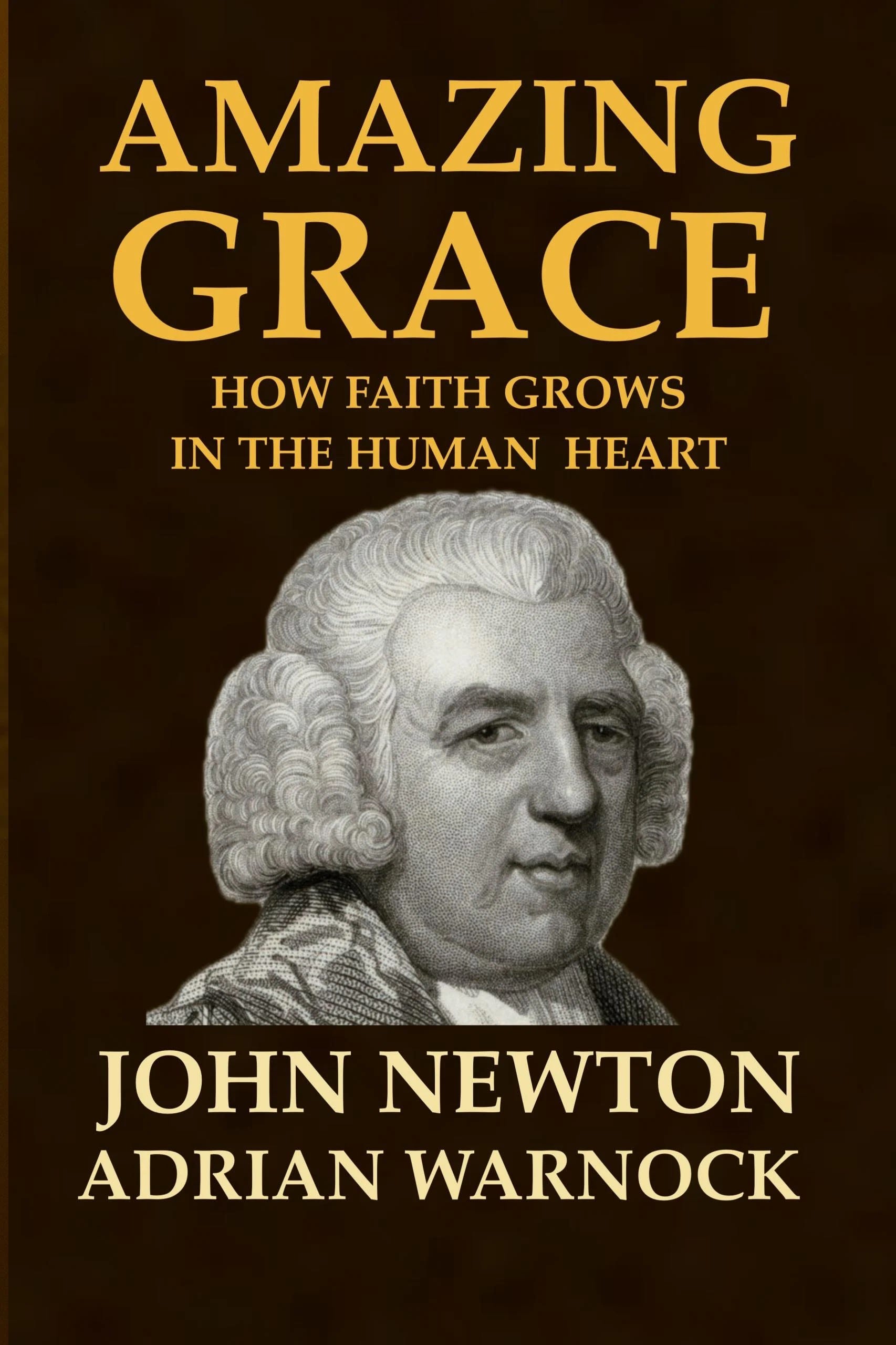
John Newton explored these ideas in his teaching often, and you can find an updated modern English version of his insights in my book Amazing Grace: How Faith Grows in the Human Heart
https://mybook.to/amazinggrace
I had never thought of opposing temptation and testing. A very interesting read, thanks !