



This is my interview with Tim Challies who is the longest running continuous Christian personal blogger I can identify. His site has published an article every day since 2003 which was also the year I started writing my own blog, initially at adrianwarnock.com before moving to Patheos. In case you have not heard of this giant of the online Christian world, his blog can still be found at Challies.com.

Tim does have a Substack account, he does not post here, but follows a number of other Christian Substacks.
Read a short article exploring the key themes from this interview, or listen wherever you get your podcasts.
Over the years our paths have had some parallels which I explain over on Patheos. We both became published authors directly because of our blogs as Crossway recognized the potential that both of us as young bloggers represented. I am glad that they took a chance on us both.
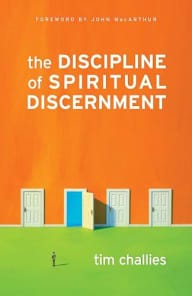
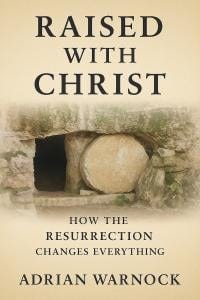
His first book The Discipline of Spiritual Discernment released in 2008. My own first book, Raised With Christ: How The Resurrection Changes Everything was released two years later in 2010.
We have also both got involved in Indie publishing, although in his case this was through founding a new small publishing house.
Read the full edited transcript here
Adrian
My name is Adrian Warnock and I’m here with Tim Challies. People who’ve been around the Christian blogosphere for a long time will have seen our names together. Recently, I tried to do a bit of digging and delving and discover who really were the longest-standing, or perhaps I should say oldest, Christian bloggers that are still writing independently.
Of course, you would go a step further and say that you’re still writing on your own personal website. And I’m pretty sure by that definition you’re the oldest.
Tim
Sure. Yes, I’ve been doing my own thing on my own site for a very long time now. I’m not picky about who’s been longest and exactly what that entails. But Yes, I’ve been at this for a long, long time, as have you.
Adrian
Well, in my case, it feels like it means more grey hairs than you.
Tim
Maybe. You probably have a couple of years on me too.
Adrian
Yes, I think I do. But tell me something, Tim. I do remember one thing about you because, of course, some of us left to things like Patheos. I still say that’s independent because I don’t have an editor telling me what I can and can’t say particularly. Although I guess if I said something really outrageous, the site owners might have something to say. But you don’t even have that filter at all.
You say that you’ve been blogging continuously since 2003. Is it really true that your blog hasn’t missed a single day since then?
Tim
It is, yep. I made the commitment years ago that I would blog every day for a year. And Yes, I haven’t missed a day since then. Now, I need to clarify: that doesn’t mean I write every day. It means something goes out every day. Sometimes that means I’ve written and scheduled things in advance.
I do take vacations. I basically never do anything on Sundays. On Saturday everything’s queued up and ready to go. Sunday comes along and I don’t do anything. So I do take time off. I just have something that goes out on a daily basis.
Adrian
Yes, I’m not daily. Even now, although I must say that Substack has relit my fire somewhat, which is quite interesting. I think I like this format.
For anyone listening to the podcast, because this does go out to podcasts anywhere you can get your podcasts, if you follow the link in the show description you’ll be able to see a link back to Substack, where you’ll find the full transcript, or edited transcript, of this conversation and lots of other opportunities to read other stuff and link back to Tim’s blog if you haven’t heard of him before, if you’ve somehow missed him, which is always possible.
Also on Patheos, what you should find, when I’ve done it, is really a summary of the key takeaways from our discussion, sort of magazine-type articles. The way I’m seeing it for me, anyway, is that Patheos is a sort of news and opinion website. It’s a little more polished than my blog used to be. I think that’s one of the reasons why I lost a bit of passion for blogging over the years.
It feels to me that when you’re on Patheos, you kind of have to have something a little more than just a rough thought. You’ve written for other sites as well as your own, haven’t you? Maybe you’ve got a similar feeling.
Tim
Yes, occasionally. I think there’s a difference between writing for somebody else’s platform and your own, and then writing to somebody else’s editorial standards versus your own. That’s part of the joy of blogging, or Substack, or whatever it is. You can set your own tone, your own way of doing it, your own standards, your own style guide, whatever you want. That’s part of the freedom it offers: being able to self-editorialize.
Adrian
If we go back for a minute to the giddy days when you and I were both a lot younger, well over twenty years younger than we are now, and writing for the first time, I think for many people, not just Christians, there was a passion about that very sense of getting rid of the gatekeepers and having the ability just to get your thoughts out there.
I think many of us thought maybe it’d be our kids. I think you’ve said something like that quite early on, that maybe your kids would one day want to read what you’d written. I was just putting quotations and thoughts and comments on there that I wanted to keep for myself, almost like a glorified notebook.
I don’t think many of us realized we’d get anything like a following. But there was that desire to have our own thing and to have an interaction with other people. I think that happened in the early days, didn’t it? Would you agree with that, Tim?
Tim
Yes, very much so. We’ve become accustomed to the idea that anybody through the internet can have a voice. All that stands between you and having a voice is opportunity or desire, I guess. You just start an account, and you can have a voice. Prior to the dawn of blogging, that wasn’t really the case.
You might be able to go to forums and develop a bit of a personality or following there, but you didn’t have this way of having a voice. You had to go through the gatekeepers, which were largely acquisitions editors at publishers or editors at magazines. If you had an idea you thought the world could benefit from, you had to go that route. Blogs came along and democratized information in a new way so anybody could have a voice.
Again, we’re so used to this now that it’s hard to remember a time when that wasn’t the case. Just like it’s hard to remember a time when you couldn’t phone somebody and get hold of them wherever they were. People used to be bound by a phone line, a physical cable within a home. That’s no longer the case.
Adrian
We are sounding like two old men, aren’t we?
Tim
Yes, but that’s the thing. In just twenty years this has changed so substantially and so dramatically that I think we can forget just what a change it was.
I don’t think most of us started blogging because it removed the gatekeepers. It’s not like we were shaking our fists at magazine editors and saying, “Why do you keep holding me down?” It’s more that this technology came along and all of us were able to use it and explore it and enjoy it. It was something new to the human experience in that way, and it was a real joy to explore.
You’re right that there was a real sense of togetherness in those early days. Bloggers interacted a great deal with one another. There was a kind of community of bloggers. That really faded once other forms of social media came along. At that time there was no Twitter. There was no Facebook. There were no supplementary forms of social media. Once those came along, the discussion moved from blogs into social media.
Adrian
Yes, and I think that was a bit of a mistake. I remember in the early days that you and I, and me and, for example, Jolly Blogger, I don’t know if you remember him, and a few other people like that, there was a genuine attempt to engage with each other through the blogs.
You still do post links to things that you’ve read and liked in your A La Carte, but I don’t know if you still do as much of that kind of, “I’ve read this thing, I want to interact with it. I want to either agree, disagree, or have a debate. Let’s have a discussion going.”
Maybe blogging was never that good a forum for that. But certainly in the early days you’d have this kind of jump from one blog to the other. I remember there were blog tours for books. I think your first book went on a blog tour. So there was more of a sense of community, which has been lost.
It’s actually quite hard to keep up with people, even if you want to. I’ll be completely blunt and honest with you, Tim. I’ve lost contact with your blog just because I stopped using an RSS reader. You probably still do, I guess.
About a year or so ago, I determined to revive the use of an RSS reader, both for me and for the whole world. That’s the kind of way I am. I put together a list of Christian personal blogs and put it into an article. Do you know what? I stopped. I don’t know whether it’s just time or what it is, but I’ve become quite poor at that. I think it’s a shame, because I would have liked to stay in contact with you. It’s very hard to. If you go on social media, you can have huge followings, but not many people see what you post.
Tim
Yes. Another thing that happened along the way is that our feeds became algorithmized. When blogging was new, there was no algorithm standing between us and the content. We had to create a list and continually visit that list. RSS allowed us to create our list where the content would be sent to us, but we were still the ones who curated that list.
Since then, most of us have handed that over to algorithms which determine what we will see so that we don’t have to. There’s a great convenience factor, but there’s also a sense in which we’re no longer in control in the way we once were.
What we’ve learned is that the algorithms reward certain behaviors or certain attitudes, largely attitudes or behaviors that are contentious, that stir the pot, and so on. I think that’s where part of the discussion disappeared as well. It’s the loud voices, the cantankerous voices, the people who are always on the attack, the people who are always responding to issues. They’re the ones who tend to get the views. Those of us who aren’t interested in that form of writing or that form of social media don’t gain the attention of the algorithm in the same way.
Adrian
No, I think that’s right. But it’s also quite interesting because people seem to have their own favorite medium and look only there. I was actually looking and we’ve had a couple of comments come up. I don’t know if you can see these as well. Somebody said that they personally don’t read Patheos and they’ll go to a personal website and subscribe, or they’ll subscribe to Substacks, but not to Patheos.
Maybe someone else only reads Patheos, or someone else is only on Twitter, X, Facebook, or one of these other platforms. If you’re not in that medium, people might not have heard of you.
Here on Substack, for example, where we’re recording this, I’m aware that you’ve got a kind of placeholder account, which is something I’ve done on a few sites as well when I wasn’t sure if I’d ever want to use them. That placeholder, even though you’ve never posted anything, has got a few hundred followers, Tim. So it seems to me that there’s a hunger in Substack for Tim. I guess we’ll see that a little bit with this video.
Some people also might not have heard of you. So, for anyone who might be completely new to you, could you say a little about what makes you tick? What kind of Christian are you? What’s important to you? How do you divide up your time? Because I’m aware you’ve got a few different hats.
Tim
I’ve been doing this since the early days of blogging, as we’ve been discussing. I focus most of my writing on encouragement, just trying to encourage Christians in their walk. That involves book reviews and directing people to content written by other people that they’ll hopefully find helpful or otherwise edifying.
I divide my days in a few ways. Blogging is the main thing. That’s been the main thing I’ve been doing for the last twenty-plus years. I write books as well. I speak at some conferences. I’m an elder at my local church, which takes up a fair bit of time and attention too. And then, of course, I’m a family man. I’ve been married to Aileen for twenty-eight years, and the Lord blessed us with three children. So Yes, lots going on in my life.
Adrian
Now, can I just say that I noticed a very young child with you in a post, because I did go and have a quick revise, as I’ve got a lot to catch up on. Is that your grandchild?
Tim
Yes, that would be my grandson Finnegan. Both my daughters are married. My son passed away six years ago. Both my daughters are married, and Abby has one child. Michaela’s just a newlywed, so no children yet.
Adrian
One thing I do like to ask guests, if they don’t mind, and I gave you the opportunity to say you would prefer me not to this before the call, is the following. Is there something that is perhaps the most challenging thing you’ve experienced that you also feel comfortable talking about? I wonder if that might be the death of your son. And if you don’t want to talk about it, that’s absolutely fine as well.
Tim
No, I’m fine to talk about it. That would absolutely be the most challenging thing we’ve encountered in life: the unexpected death of Nick. That was in 2020, at the height of COVID and all that. He was in the States. He was going to the Southern Baptist Theological Seminary. Then one day, completely out of the blue, we got the news that he had passed away. So yes, it was a tremendously challenging period of life.
The Lord was very present with us, very gracious to us, very kind to us. I can honestly say that at the end of it, all of us in the family love the Lord more now than we did before. None of us ran away from God or blamed him for anything, by God’s grace. But yes, it was a tremendously difficult period of time.
Adrian
I think that’s an interesting way of putting it. One thing I’ve observed with people who go through challenges is that it can do one of two things. It can drive you away from God. You hear certain atheists who talk about children in Africa getting their eyeballs eaten by worms and ask how there can be a loving God. You hear Christians or ex-Christians who say, “I stopped believing because of this thing that happened.”
Then for other people, it drives them to God. You just said that. So I’m guessing there must have been at least some temptation at some point, some questioning. What do you think it was that stopped you from running away from God?
Tim
Ultimately, God is what kept us from running away from God. I think in those times of great distress many people find out whether they’re truly saved or not, whether God really does have them in his grasp. There would be a natural human temptation to run away from God and say, “If God is sovereign”, and I believe strongly in God’s sovereignty, “if God is truly sovereign and this truly terrible thing truly happened, then God must have been able to prevent it.” Or it was in some way God’s will, whatever language we want to use around that. So we’re left grappling with the fact that God could have prevented this thing and did not.
Part of the mystery of Christianity, the mystery of the faith, is that the very same thing that drives some people closer to the arms of the Lord is the thing that drives others away. It’s a mystery, except that we believe God is holding those he loves. They’re able to interpret their circumstances in light of God being sovereign and God being good. They interpret them in light of God’s revealed character rather than letting those circumstances change their understanding of God’s character.
For many who pass through these times of great sorrow, there’s a sense on the other side that you almost gain the assurance: “No, I really am a believer.” Thank God that he held me through this, because now I know something about myself that I didn’t know before, that even if God calls me to endure something tremendously difficult, I will hold fast to him. Why? Because he’s holding fast to me.
Adrian
That’s beautiful. That is beautiful. I think you’re right, though. There are times when I’m sure waves of grief, especially in the early days, just came over you in the way that they would anyone else.
Tim Yes, absolutely.
Christians cry, and Christians ought to cry, because what we experience in life truly is grievous. The fact that God ordained it, or the fact that God is sovereign over it, or the fact that my son is with the Lord, these are all true. These are all beautiful truths to hold on to. But none of them take away from the genuine sorrow of death, the parting of a loved one, and the stark reminder that this world is so badly broken.
The same evil that caused the death of my son ultimately brought death into this world. It’s the same evil that causes those children overseas to suffer and die and causes people here to suffer appalling tragedies. So we weep. We also weep because of the sheer brokenness of this world. Christians aren’t Stoics. We’re not expected to be Stoics. We ought to weep because these things are genuinely sorrowful.
Yet I do think it’s worth saying that amidst the weeping, I don’t think any of us ever shook our fist at God, impugned his character, or demanded answers that he wasn’t willing to give. I think he gave us the trust in that moment to say that what was true of God before is true in this moment as well.
Nothing about God has changed. It’s just our understanding of him that has changed. Before, we knew that God could do anything he wants to do in our lives. Now we realize that he actually will do anything he wants to do in our lives because, for some reason, he deems it best. He deems it part of his will. Who are we to fight the will of God or say that we can do better?
Adrian
Yes, but different people’s experiences will be different. I’m sure there’ll be some people listening who are thinking, “How come you were able not to have those impulses?” I’ve noticed that some people’s natural tendency in any kind of suffering is to be angry with God. Some people’s natural tendency in those moments is instead to ask themselves, “Am I even a Christian?” and to turn inward. I know that was more my reaction when I was very sick. I had to go back to the gospel and ask myself, “Do I really believe this or not? Is it me that’s the problem?”
Other people get completely swallowed up in sorrow or lose their peace. Even the Puritans used to talk about the dark night of the soul, those moments when we most need God and yet it can feel as if he’s a million miles away. So I guess each person’s experience is very different, isn’t it?
Tim
Yes. The Puritans would speak about God’s desertions, too. They would go through something tremendously difficult, or maybe not, but simply wouldn’t have that felt sense of God’s presence in their lives. They felt as though they were praying to brass heavens. I think many of us have experiences like that from time to time.
I do think you’re right that when something really difficult befalls us, it’s right in some way to ask whether this could be God’s divine chastisement. Scripture does tell us that God will at times engage in our lives in such a way that, if we’re straying from him, he can use his fatherly discipline to steer us back.
I’m not convinced that would involve taking the life of a child. I know that’s what happened to David, but an adult child who is independent is a different situation. I don’t know that I see evidence for that.
But certainly with illness and other hardships it is wise to ask: Am I doing something? Am I living in such a way? Am I falling into sin in such a way that God may be, in his fatherly love, interrupting me and steering my course back to him? Many times we can come away and say, “No, I don’t think that’s the case.”
We can bring our elders or pastors alongside us and say, “Pray with me. Help me understand this. Let’s go to the Lord together and ask him to make it clear if that’s the case.” Then we can come through that process and conclude that God is doing something else in this.
He might simply be weakening me as he did the Apostle Paul. He might be stopping me from some future endeavor that would have harmed me. We don’t know. But we can entrust all of this to our good and kind God.
Adrian
One thing I want to come back to is something you said earlier, which I think is quite important: this idea that it’s okay to weep. After all, Jesus wept when his friend was in the tomb, even though he knew he was about to raise him from the dead. That’s quite a powerful verse. I don’t know if that’s a verse that’s meant a lot to you as well, because it certainly has meant a lot to me over the decades.
Tim
Yes. There are many proofs in Scripture that Jesus was truly man, but I think that’s one of the most profound: Jesus wept. I think Jesus was weeping at the sorrow of his friend dying, but surely he was weeping at more than that. He was weeping at the very fact that his friend would have to die. He was weeping at unbelief and other effects of living in a fallen world. So yes, Jesus certainly modelled weeping.
What Jesus never did was shake his fist at heaven and impugn God, or in any way suggest that the Father’s motives were less than perfect. I think we need to be careful to show that same restraint.
Jesus could say, “If possible, let this be taken from me,” but he never said, “How dare you?” or “Why would you?” Likewise, we may ask God why, but not in a way that says, “I could do better,” or “My way would have brought more justice.”
Adrian
Even Jesus himself is saying, in effect, that the world is not how it should be. Sometimes when people hear this idea of the sovereignty of God, they twist it in their minds and think it means God somehow takes pleasure in suffering. They imagine him rubbing his hands together and saying, “What trouble can I send next?” As though suffering were His ultimate purpose for us. Of course it isn’t. His ultimate best for your son was that he would live forever. We believe he is living forever now, but God’s original design certainly didn’t involve death.
Tim
But we can truly believe that in this world, as it currently is, God is always acting in such a way as to bring himself the greatest glory. Again, we may not see how that is so in our circumstances, but that’s why faith is so important.
We don’t just exercise faith once, get saved, and then live in doubt. We live by faith moment by moment and providence by providence. We say, “I don’t see how you could be glorified in this. I don’t see how this could be better than the plan I had mapped out for my life, where my son would outlive me.” But we can entrust that to God.
We have the ultimate proof of that in the cross of Jesus Christ. Something happened there that looked utterly tragic. What good could possibly come from it? Yet it brought about the greatest of all goods. All of that took place according to God’s hand and God’s plan.
God used the greatest of all evils to accomplish the greatest of all goods. So we can look at our own lives and say that what happened to us is not more tragic than the death of the perfect, sinless Son of God.
If God can use that to bring about the greatest of all goods, then surely we can trust him with this as well and see what he brings from it, whether we understand that in this life or only when he makes all things plain.
Adrian
That’s beautiful, and I like that sense of hope. I don’t know if this is as much of an issue in Canada or the United States as it is here in the UK, but there are certainly some Christians who struggle with the idea that we’re allowed to grieve.
It’s funny, because somebody who joined said they’d first seen us when we were both blogging about the launch of the ESV. That’s really going back some, isn’t it? One verse in the ESV, and actually in almost every modern translation, that I’d like to see translated differently is the one that says, “that you may not grieve as others do who have no hope.”
I’ve studied that verse. It’s a verse that some people read as meaning that we’ve got to pretend we’re happy. We mustn’t wear black at a funeral. We must smile and have a celebration. But the verse means that we should not grieve in the same way as someone without hope. It’s making a comparison. It’s not saying you can’t grieve, even though that’s how it naturally sounds in English. It’s actually saying, “Look, you can grieve, but don’t grieve without hope.”
Grieving with Hope
If there was one verse in the ESV that I would tweak the translation of it would be 1 Thess 4:13. In it we are told “that you may not grieve as others do who have no hope.” It is unfortunate simply because the most natural interpretation of that phrase in English is “You are not allowed to grieve because you have hope.”
But that is not what Paul meant. I think the NIV is closer with its “Brothers, we do not want you to be ignorant about those who fall asleep, or to grieve like the rest of men, who have no hope.” But even that can be misleading and open to the same mis-interpretation.
No, a better translation of this instruction would be simply “do not grieve in the same way as those who have no hope.”
The Greek word translated here translated “as” is Kathos and it really means “just as” you can see how that is the case when you see the following list of verses and realize you could add the word “just” before the word “as” or indeed substitute it for “in exactly the same way “. It basically means in the same manner.
The disciples went and did [just] as Jesus had directed them. (Matthew 21:6)
He is not here, for he has risen, [just] as he said (Matthew 28:6)
Be merciful, even [just] as your Father is merciful. (Luke 6:36)
Therefore welcome one another [just] as Christ has welcomed you, for the glory of God (Ro 15:7)
Paul is certainly not advocating a form of heartless stoicism that rejoices even in death. Yes, we know that God works all things for good (Romans 8:28), but that does not mean that the things themselves are always good. We live in a fallen world where everything is not as they should be, and where death is an unwelcome invader.
Indeed Paul himself elsewhere speaks of a potentially fatal sickness of a friend and says, “Indeed he was ill, near to death. But God had mercy on him, and not only on him but on me also, lest I should have sorrow upon sorrow” (Philippians 2:27).
So we see that Paul is not telling us to somehow suppress the natural emotions, but rather that there is a different way that the Christian goes about mourning because he knows he will see his loved one again.
“Philosophers often ‘consoled’ the recipients of their letters by saying, ‘Do not grieve,’ or ‘Do not grieve too much,’ since ‘it will not do any good.’ This is not, however, Paul’s point”1
“The paramount difference between the grief of a believer and unbeliever is hope—one has it and the other doesn’t.”2
“Between believers, that loss is temporary; when an unbeliever is involved, it’s permanent.”3
As the ever pastoral scholar John Stott put it,
“We observe that Paul does not forbid us to grieve altogether. Mourning is natural, even for a while emotionally necessary. It would be very unnatural, indeed inhuman, not to mourn when we lose somebody near and dear to us. To be sure, it is appropriate at Christian funerals joyfully to celebrate Christ’s decisive victory over death, but we do so only through tears of personal sorrow. If Jesus wept at the graveside of his beloved friend Lazarus, his disciples are surely at liberty to do the same. What Paul prohibits is not grief but hopeless grief, not all mourning but mourning like the rest of men, who have no hope.”4
Tim is that something you’ve thought about as well?
Tim
Oh, absolutely. We should be grieving week by week in church. If your church follows a standard Protestant order of worship, you start with a call to worship and fairly quickly move into a time of confession.
You’re confessing how broken and sinful you are before the Lord and feeling the sorrow of that. Then comes the joy that follows when you hear the assurance of pardon and go on to praise the Lord for what he has done. As Christians, we should be the weepers. We have every reason to grieve and to be sorrowful.
Adrian
We grieve, but not without hope. I think that’s so crucial. Paul himself talked about a friend who nearly died. When that friend recovered, Paul said that he was spared “sorrow upon sorrow” (Philippians 2:27, ESV).
If it was good enough for Paul, and good enough for Jesus, then it’s good enough for anyone watching, listening to, or reading this who feels guilty about weeping or grieving.
For me personally, nobody died, but I was very sick and there were lots of problems associated with that. I spent many nights weeping into my pillow, unable to stop crying. That’s the reality sometimes. I think people sometimes think real men don’t cry. Well, here’s two who do. And of course Jesus did as well. We’re in good company there.
On a slightly lighter note, one thing I wanted to mention is that almost twenty years ago you and I actually met face to face. The online world sometimes collides with the real world.
I can’t believe it’s almost twenty years ago that I was in Toronto visiting a friend. My friend, who is also a pastor and still pastors in Toronto, met up with us. We had dinner together. That’s right, Andrew Fountain.
It was a lovely evening. But I do have one small bone to pick with you. I came to your country and we had dinner, but I’ve now got proof, unless there’s some AI stuff going on in that documentary of yours about church history, that you’ve been to England and never looked me up!
Tim
I’ve been to England many times and never looked you up. I’ve got nothing to say. No excuses!
Adrian
I’ll let you off this time. But next time you’re here, let’s connect, shall we?
Tim
Yes, totally.
Adrian
I’m not sure I’ll be crossing the Atlantic again because I don’t know how much you’ve been following me either. For me, my big problems really started in 2017. In some ways, a little before that, because I was beginning to decline physically without realizing what was happening.
My life changed in what was almost a sliding-doors moment. Funnily enough, I was getting off an underground train. I stepped onto the platform and suddenly couldn’t walk. I sank into a chair and felt terribly ill. I ended up in hospital with pneumonia. Then I was diagnosed with blood cancer. My body never really recovered from that.
Fortunately, the blood cancer is in remission. Actually, for the last few months my health has been better than it’s been in a long time. But even now I’m still dealing with some of the after-effects of that initial infection, the cancer itself, and the treatment for it. I had to have chemotherapy. Praise the Lord, though, I’m still here.
More recently I’ve been able to get back into writing again, which has been wonderful. I guess that’s partly my excuse for losing touch with you. But I think the truth is we really get driven apart, as we were saying earlier, by these algorithms and similar forces.
It’s a bit of a worry to me that algorithms are damaging the church by stopping us connecting with people who aren’t already in our own circles. I think they’re also damaging society more broadly.
It’s concerning that we’re becoming more radicalized and more polarized into little groups. I’d suggest that’s contributing to some of the political shifts we’re seeing across many countries.
There’s a lot of anger. There’s a retreat from some of our ideals about equality, cooperation, and treating one another with humility and respect. Algorithms are basically messing up both the church and the wider world.
I don’t know whether you’d agree with that.
Tim
Yes, I think they’re certainly amplifying something that already exists within us. There’s a desire to be critical and a lack of character that all of us display at times. Algorithms reward those tendencies by rewarding negativity more than positivity.
A couple of times I’ve done something interesting: I’ve reset the algorithm or started entirely new accounts on platforms like X or Instagram. It never takes long before those systems start feeding me content they think I’ll want to see. What’s striking is that it’s often extremely negative material, sometimes racist, sometimes something else inflammatory. It somehow determines that what will keep my attention is content that makes me angry. That’s basically what the algorithm wants: for me to be discontented and outraged, and then to share that outrage with other people. Outrage spreads very effectively. I’d say that’s more true of X than Instagram, but it’s still revealing.
As Christians, that doesn’t mean we can’t use these platforms. It does mean we need to be very careful because they reward exactly the kinds of behavior Scripture discourages: speaking critically of others unnecessarily and constantly stirring conflict.
So we need to ensure that we’re speaking well of others, speaking truthfully, and always trying to build up rather than tear down.
Adrian
That’s very good. Substack actually does have an algorithm. It’s easy to forget that because you come on, start following people, and get involved in conversations. But it does have an algorithm. There’s something different about the Substack algorithm, though, and I wonder whether it’s connected to the business model.
Where do X and most other social media platforms make their money? Advertising. They want eyeballs in front of content for as long as possible. Keep scrolling, keep watching videos, keep consuming.
Whereas with Substack, at least for the moment, there isn’t advertising. Maybe there will be in the future. Their income comes from people deciding they want to pay for certain writers’ content. You’re only going to pay for content that you perceive to be good, healthy, and helpful to you. It seems to me, therefore, that the algorithm is rewarding those kinds of writers.
Certainly, the little corner of Substack I’ve found myself in seems full of good Christians, and not just Christians who are exactly like me. I’m quite determined to get through this conversation without mentioning a certain subject, because when I was reading your post about our meeting twenty years ago, I noticed that I apparently brought it up in minutes that time! I think I’ve done quite well so far.
What I was going to say is that there are Christians from different traditions and backgrounds, yet they’re responding to one another respectfully. It reminds me of the early days of blogging. So perhaps that’s a little advertisement for Substack.
But you’re right, we have to take responsibility, because ultimately we’re the ones feeding the algorithms. Not individually perhaps, but collectively. If Christians find good-quality content and enjoy it, there’s no reason they shouldn’t share it. Even if your blog never migrates over here, somebody can find a good post you’ve written, link to it, recommend it, and talk about it.
Whatever platform we’re using, sharing other people’s work so others can discover it is probably one of the kindest things a Christian can do, not only for the author but also for the readers.
Tim
Yes, I think Substack is an interesting model and, so far, a good one. That said, I don’t think I’ll join it, and I can give a few reasons.
First, I’ve already built a very large body of work elsewhere, and I don’t think it would serve me well to move it.
Second, I’ve never once Googled something and found a Substack article as the search result.
Third, I think all platforms eventually go the way Cory Doctorow describes in a book whose title I can’t repeat here because it contains a bad word.
His argument is that these platforms eventually change in ways that make them worse for users. You end up in a situation like Facebook, where people complain about it but can’t leave because everyone is there. Or X, where people dislike aspects of it but still use it because it uniquely provides something they want.
I think Substack may already be moving in that direction by introducing more algorithmic features than it originally had. Samuel James, who writes Digital Liturgies on Substack, wrote about this recently and expressed some concern about the changes he’s seeing.
So I have no issue with Substack at all. I think it does some things very well, particularly sending everything by email.
Tim does follow a number of people on Substack but does not post material here.
You’ll remember that when blogging was relatively new, people were tired of email because of spam. Nobody wanted another email cluttering up their inbox. Then everything became algorithm-driven and people started wanting email again because it allowed them to choose exactly what they subscribed to and step outside the algorithm.
That was really Substack’s moment. It provided something uniquely helpful. I just don’t know what its future will look like.
Tim does have a Substack account, he does not post there, but follows a number of other Christian Substacks.
Adrian
Well, we’ll see, I guess. What about your blog? Is it available through email subscription?
Tim
Yep.
Adrian
That’s good. Maybe I’ll sign up.
Tim
One thing I’ve never done is put a paywall between my content and the people reading it. Some people voluntarily support the site through Patreon and similar platforms, but I’ve never wanted to put any content behind a paywall. That’s a decision I made because, thankfully, I haven’t needed to do it.
I also think there’s a downside to paywalling content. Your best content becomes unavailable to the greatest number of people. People generally don’t share paywalled articles. So not only are fewer people reading them, fewer people are sharing them as well. And that’s unfortunate because, by definition, it’s meant to be your best work. It seems to me there’s probably a better model out there somewhere.
At the same time, I’ve been doing this for a very long time. As an early adopter, I developed a core readership that’s easy to take for granted. If I were starting from scratch today, I probably couldn’t do it in quite the same way.
Adrian
You’re anticipating a thought I’ve been having about my own situation here on Substack. I’ll just say it now: these interviews and conversations will never be behind a paywall. But I do think there’s something to be said for allowing people the opportunity to support the work financially, because there are genuine costs involved.
Writing requires equipment. It requires time. It requires books. In my case it seems to require an ever-expanding Logos Bible Software library. There has to be some way of covering those costs.
So let me ask you the question, Tim. If you’re spending most of your time blogging, and everything is available for free, how do you actually pay the bills?
Tim
Through people who voluntarily support the work on a monthly basis, through sponsorships, and through related activities. I run sponsored posts where advertisers can publish content on the site. Those posts are very clearly marked as sponsored.
Then there are things like writing books and speaking at conferences. All of those income streams come together and help cover the costs.
And the costs are significant. As a site grows, expenses grow dramatically. That’s before you even think about salaries. I have a couple of people who work for me on a part-time basis handling administrative work, which increases as the site grows.
A newsletter can cost hundreds of dollars a month when you’re sending hundreds of thousands or millions of emails. Hosting costs have gone from hundreds of dollars to nearly a thousand dollars per month because the site itself has become large and requires more resources.
Then there are AI bots constantly hitting websites, which increases server loads even further. So yes, there’s a lot of overhead.
I’m very grateful to those who help carry those costs. Their support enables other people to continue reading the content for free instead of forcing me to resort to a paywall or some other measure that would feel more like desperation than choice.
Adrian
Yes, sure. I also don’t think people should be under any illusions about book authors. You have to be an incredibly successful author to make a living purely from royalties.
I’m presuming that’s not the case for you. You’ve written a lot of books and sold quite a lot of copies, but there aren’t many Christian authors I know who could live solely from book royalties. Am I wrong?
Tim
I don’t think there’s anyone in the Reformed Christian space who is living entirely off book royalties. There may be people who could, but I don’t think anyone actually does.
For most people, if you write a book and it sells 50,000 copies, that’s considered a huge success for a Christian book. People would be thrilled with that. Let’s say you make about a dollar per book. That’s $50,000, but it’s spread over the ten- or twelve-year life of the book.
Unless you have a massive catalogue of books and you’re releasing several successful titles every year, book royalties can be a helpful supplement, but they’re almost never enough to provide for a family on their own. Especially if you’re living in a major city where expenses are high.
Adrian
Yes. I think it might be worth talking a little more about this because one thing I’ve noticed about Substack is that it’s become a kind of honeypot, or perhaps a beehive, for writers.
You don’t need to have a published book to be a writer, of course, but there are many people there whose ambition is ultimately to publish books. It’s probably worth disabusing people of the idea that Substack subscriptions and book sales are likely to replace a full-time income for most people.
At the same time, I don’t think most people are really in it for the money. I guess that’s true of you as well. You need to pay the bills, of course, but fundamentally you’re writing because you want to get a message out. Am I wrong?
Tim
No, that’s right. At this point it’s become a vocation, and therefore it needs some sort of monetization attached to it. But that’s not why I do it.
With Substack, YouTube, and book publishing, there’s usually a very small number of people who make the vast majority of the money, and then there are many, many others who make very little.
The same is true in Christian publishing. For every book like Gentle and Lowly, which sold extraordinarily well, there are countless other books selling only a few thousand copies. Most bloggers or Substack writers receive double-digit or perhaps triple-digit readership on a typical post and not much more.
Likewise, only a very small percentage of readers on my site become patrons or financial supporters. That’s totally fine.
But just because something gains attention doesn’t necessarily mean there’s a great deal of money involved. The same is true of authors. Somebody may have a recognized name without being remotely wealthy.
Adrian
Yes. You founded a publishing house, didn’t you? Cruciform. Would that be considered traditional publishing, or is it more of a small independent publisher? I’m not even entirely sure what counts as an independent publisher these days.
Tim
It really started because I wanted to get some of my own books to market more quickly. In that sense I was essentially self-publishing. Then Kevin Meath, whom I knew as an editor, became involved. I’d actually approached him and asked if he’d be willing to edit one of my books.
He came back and suggested that perhaps we should just start a small publishing house together. That’s how it began.
I never had a financial stake in it, and I’ve since stepped away from it. The whole purpose was really to create an infrastructure that would allow me to publish certain books more quickly rather than going through the traditional publishing process, which is often a year or a year and a half from proposal to publication.
Adrian
Yes, I understand that. My first book, Raised with Christ, was published through Crossway, and the process was very long. I think it was at least a year between finishing the manuscript and seeing the book published.
When you’re used to writing an article, pressing publish, and maybe even editing it afterwards, that waiting period can feel quite painful. Though it’s important because other people have a chance to review the work and improve it.
Traditional publishers are also taking a huge financial risk. They’re printing thousands of books and trying to estimate demand. Print too few and the economics don’t work. Print too many and they sit in warehouses for years.
Getting the word out is difficult too. Even a large publisher like Crossway must sometimes wonder why one book becomes a phenomenon while another struggles. You mentioned Gentle and Lowly. I imagine even publishers don’t fully understand why certain books explode while others don’t.
A lot of it still seems to come down to word of mouth, recommendations, reviews, and ordinary people telling others, “This is a book worth reading.” I think we often underestimate the role individual readers play in that process. Sometimes it feels as though the whole publishing system is a bit broken. Am I wrong to think that?
Tim
I don’t know that it’s broken. I think it’s just very complicated. Publishing contains a lot of intangibles.
I’m sure publishers have put substantial marketing budgets behind books that went nowhere, while other books received comparatively little marketing and then exploded in popularity.
Those are simply the realities of publishing. Generally speaking, publishers are quite good at assessing risk and estimating how books will perform.
One reason authors are always encouraging readers to pre-order books is that it gives publishers valuable information. If they see strong pre-orders, they can increase print runs and have more stock ready by launch day.
It’s certainly a difficult process. I don’t think anyone can confidently predict which book will become a huge success. For example, Crossway has Dane Ortlund’s new book Finally Home coming out. I imagine they view it as a natural follow-up to Gentle and Lowly and are putting significant resources behind it. Will it become another phenomenon? Or will it quietly find its audience? I don’t think anyone knows.
That’s why publishers spend so much energy trying both to understand the market and to place books where readers are most likely to discover them.
Adrian
So for somebody who’s watching this and perhaps has built up a Substack readership of a few hundred people, maybe a thousand or two, and is starting to think, “I’d really like to write a book”, people often wonder whether they should pursue traditional publishing, self-publishing, or perhaps use one of the smaller publishers where authors contribute financially.
Have you got any thoughts for someone in that situation? Let’s say they’re realistic. Even if they pursue a traditional publisher, they may never write the next bestseller everyone dreams about. What advice would you give to someone who’s just wanting to test the waters?
Tim
In general, I would recommend trying the traditional publishing route first. There are certainly things authors find frustrating about traditional publishers. The amount of time involved can be frustrating. It can feel as though another author’s book is receiving more attention than your own. But traditional publishers add a tremendous amount of value.
First, they’re usually quite good at evaluating whether a book will genuinely meet a need in the marketplace and whether there are already similar books available. I’ve had agents and publishers tell me things like, “Nobody would want to read that book.” I may disagree, but it’s useful feedback. I might think I have a great idea, and they may say, “Actually, that’s not a strong idea.” You have to take that seriously.
Beyond that, they add immense value through editing, design, cover creation, production quality, and all the details that help turn a manuscript into a polished book. It’s very difficult for an individual author to match that level of quality on their own, from typography and layout to editing and overall presentation.
So my advice would be to approach publishers first. Yes, it will take time. Yes, it may end in rejection. But I’d still recommend starting there.
Adrian
But what if the answer is a firm no and you still feel strongly about a particular project? There’s one of my newer Substack friends whose book I’d love you to look at because I think you’d enjoy it. He’s written a book called Christ in You, and it’s genuinely beautiful. He’s self-published it. I don’t know all the reasons behind that decision, but it made me think about this again. There’s something powerful about simply getting the work out there. You can hire editors and do many of the things a traditional publisher would provide.
I suppose this question applies whether someone self-publishes or publishes traditionally: how do you actually get attention for the book? How would someone approach a reviewer like yourself and say, “Would you consider looking at my book?”
Tim
That’s difficult. Whether you’re talking about publishers or reviewers, we’re all trying to devote our attention to books that we believe are most likely to be useful and impactful. It would be unusual for me to review a self-published book.
That isn’t because there’s anything wrong with self-publishing. It’s simply because self-published books generally don’t perform particularly well in the marketplace, and often there’s a reason publishers passed on them. Of course there are exceptions. The Shack is one famous example. It was rejected by publishers and then went on to sell an extraordinary number of copies…. I am not saying that it is a good book….
Adrian
For a moment there, Tim, I thought I was going to have to challenge you on that example! Has Tim changed in all these years?
Tim
But it did give new life to the dreams of many aspiring self-published authors. People looked at it and thought, “Here’s somebody who was rejected by traditional publishing and succeeded enormously.”
There have been other examples as well, but they’re still relatively rare. So there’s absolutely nothing wrong with self-publishing. There’s no moral issue involved. But people should understand that it is usually an uphill battle to gain attention for that book.
Adrian
I think that’s true. At the same time, unless you’ve already got a large audience, a substantial social media following, a large congregation, or some other platform, it’s difficult to attract attention even for traditionally published books. Most traditionally published books sell relatively few copies as well, don’t they?
Tim
They do. I suspect the average Christian book probably sells fewer than ten thousand copies over its lifetime. That’s why books like Gentle and Lowly stand out so dramatically.
Those highly successful books, and things like the ESV Study Bible and other major sellers, generate significant revenue. That success then allows publishers to take risks on smaller projects that may only break even or perhaps even lose money. In that sense, the larger successes help support a great deal of other ministry-oriented publishing.
Adrian
I imagine there are probably some people listening who feel slightly uncomfortable with all this business language, marketplace language, commercial language, when we’re talking about Christian books.
Yet this is the real world.
Even if you’re self-publishing, you still have to think about who might actually read the book. There is a school of thought that says, “I just want the people God intends to find my book to find it.”
One reason I’ve become quite passionate about Substack is that, although I’ve had reasonably large followings on Twitter, Facebook, and decent readership on Patheos, I get very little feedback these days. Very little conversation. Very few emails. Very little interaction.
I don’t know exactly why that is. Perhaps people feel more distant from writers on larger platforms. On Substack, though, I’m simply one of many people. I’m trying to lean into being the new guy here rather than the old hand. What I’ve found is that I’m making new friends. I’m interacting with people again. They’re writing to me, and conversations are starting. It’s reminded me of what made blogging enjoyable in the first place.
Tim
Yes. I want people to believe in their books enough that they don’t simply shrug and say, “I’ll put it out there and see what happens.” There’s something admirable about saying, “I really believe this book can help people. I believe this message matters.”
I don’t want to hear a pastor stand up on Sunday and say, “I don’t really know whether this sermon matters.” I want him to say, “I’ve spent the week studying God’s Word, praying, and preparing. I believe this can bless people.” I think authors should have that same kind of confidence.
At the same time, there’s something unpleasant about people whose entire goal is to make a name for themselves. So somewhere between false humility and naked ambition is the right place to be.
Authors should say, “I believe in this message. I’m going to put it out there. If it helps people, I’ll be grateful.” In many ways, it’s like so much else in life. We should be amazed that God allows anyone to read our words at all, rather than constantly lamenting that there aren’t more readers. In the end, however many readers we have may prove to be more than enough, because the Lord holds us accountable for how we influence each and every one of them.
Adrian
No, I think that’s absolutely right. I guess it’s a little bit like being a pastor, isn’t it?
There are some people who are called to pastor a church that may never grow beyond ten people. But if those ten people hear the Word of God faithfully, if you care for them pastorally and help them through the kinds of difficulties we’ve been discussing, I think you’ll get to heaven and hear, “Well done, good and faithful servant.”
Now, if there’s something you’re doing that’s preventing the church from growing, that might be another issue entirely. But do you see what I mean? Sometimes we all want to be at the top, and maybe we shouldn’t.
Tim
Yes. Two things. First, the people at the top are no more content than we are. If my most recent book sold ten thousand copies or a million copies, selling a million wouldn’t necessarily make me happier. I have to know that as a theological reality.
If I can’t be content with what I already have, I won’t be content with more either. There will always be somebody further ahead. I’ll simply move the goalposts. Or I’ll fear the next person who comes along and threatens my position. There’s no real joy to be found in simply having more. That’s just not how human beings work.
Adrian
Yes. One thing I will say about you, Tim, is that throughout your career in blogging, writing, and everything else, you’ve consistently tried to give other people a leg up. Whether that’s through A La Carte or through reviewing books and highlighting other people’s work, you’ve always tried to help others.
I think that’s something to be commended.
Maybe we don’t all have the platform that Tim has, but I think I’ve already said this: by all means find ways to help other people. Don’t see them as competitors. See them as people we can learn from, people we can encourage, and people we can help lift up from time to time.
Tim
Yes. I think all of us should be willing to say, “If somebody else can do this better than I can, that’s okay.” I’m wanting to be as faithful as possible with what the Lord has entrusted to me. But if God chooses to take it away or give it to somebody else, I have to be content with that. The same God we were talking about earlier in relation to grief is the God we trust in these matters too.
It may simply be that you don’t have more readers because you don’t have the character to handle it. It might be that if you got what you wanted, it would destroy you. There are all sorts of possibilities.
I look at some people who appear to be at the top of the world and wonder how they cope with that level of fame. I wonder what will happen to them over the long term. We’ve all seen examples of people who seemed to have everything and then crashed and burned.
Perhaps the Lord protects us from things we think we want.
That doesn’t mean we shouldn’t have ambition or pursue opportunities. But it does mean we should trust. We should have faith that God knows best.
Adrian
Yes. Paul talks about the sphere that God entrusted to him and says that sphere reached even to the people he was writing to.
“But we will not boast beyond limits, but will boast only with regard to the area of influence God assigned to us, to reach even to you” (2 Corinthians 10:13, ESV. NIV uses the word “sphere”)
There’s something important there. Marketing matters to some degree, but perhaps we also need to trust God to place us where he wants us.
If I’m here on Substack helping one individual, or if I’m in my church counselling one person who’s just gone through a terrible experience, I get the feeling that’s more important to God than reaching thousands. Maybe I’m wrong.
Tim
Absolutely. Some of us have to come to terms with the fact that we’re one-talent or two-talent people rather than five-talent people. God distributes gifts differently.
Not all of us receive the same abilities, capacity, opportunities, or influence, and that’s perfectly fine. We trust God with that as well.
When we’re young, most of us assume that we’ve been given the complete package and that, given the right opportunity, we could become truly great. As time passes and we gain a more realistic understanding of ourselves, we realize that maybe we don’t have that level of intellect, writing ability, or gifting.
And that’s okay. Our responsibility is simply to be faithful with who God has made us to be.
Adrian
Yes. And if you do write books, you may sometimes be disappointed by sales figures. But then you discover that somebody’s life was genuinely changed by your book, or that it made a profound impact on them.
That’s been encouraging for me recently. As I’ve started doing more of these interviews, I’ve met people who have said, “Oh yes, I remember you. I read your book.” Sometimes they were people I never would have expected to have read it. Several have told me that the book was genuinely helpful or formative for them. You just think, isn’t that what really matters?
I think it was Aaron Armstrong who mentioned that someone once told him, “You may not have thousands of readers, but you’re influencing people who themselves are influential.” That’s something we shouldn’t forget.
Every one of these people is a human being. They all need encouragement and influence in their own lives. Sometimes I wonder whether the welcome Billy Graham received in heaven will be greater than the welcome received by the person who first invited him to the meeting where he came to faith.
Humanly speaking, without that person, the ministry that followed might never have happened. I just think we all have a part to play.
Tim
Absolutely. I’m almost certain that the people closest to the throne, if I can use that expression, are people neither you nor I have ever heard of. They were probably one-talent people.
God entrusted very little to them by the world’s standards, but they were completely faithful with what they were given. We rightly thank God for the people who have been entrusted with much and have used it well. But I don’t think God evaluates things the way we do.
He looks at what he has given us and asks how faithful we’ve been with it within the sphere where he placed us. His perspective is entirely different from ours.
Adrian
Yes. I think that’s such an important point. One danger of the internet is that it can make all of us think we’re little celebrities. You’ve got your own audience, your own paparazzi almost. You worry about what photos people might post of you online. You hope nobody catches your bad angle.
But actually, I don’t think we matter quite as much as we sometimes imagine.
At the same time, we matter enormously to the people God has placed in our lives. When God evaluates Tim’ life, I doubt the first questions will be, “How many years did you blog every day?” or “How many books did you write?” Perhaps the questions will be more like, “How was your family? How was your church? How faithful were you in those responsibilities people couldn’t see?” Pain, suffering, and difficulty often remind us that those hidden things are far more important than we realize, and much harder to get right. God’s grace does cover our mistakes here as well.
Tim
Yes. I very much agree.
Adrian
Yes. So Tim, for the budding Adrian or Tim who’s just starting out on Substack, enjoying the delight of discovering new people, writing, linking up with others, making friends, and interacting online, what would you say to them in closing?
Tim
I would say: just be faithful. Keep going for a while.
I think most people expect great results with relatively little effort.
I sometimes think about Tim Keller. Wasn’t he well into his forties or fifties before he wrote his first book?
That’s true of a lot of people. You have to labor for a very long time before you even know who you are as a writer, before your work is able to make much of an impact.
I receive emails from people who want me to tell others about their blog. They’ve written seven articles, then another three, and because they haven’t changed the world or landed a book contract, they quit.
I understand that reaction.
But if you want to be a writer, you need to prepare yourself for a long march of writing and creating good content.
Make sure you’re writing for yourself first, in the sense that you’re not simply preaching at other people. You’re seeking transformation in your own life as well.
Don’t write in a condescending way that says, “Here’s what you need to make your life better.”
Instead, write from your own experience. Say, “Here’s what I need to hear. Here’s what God is teaching me.”
Then simply try to serve people through the written word.
Adrian
I guess I’d like to mention a couple of things.
One of the interviews I did recently was with Keith Plummer, and he immediately sprang to mind while you were talking.
Keith was a pastor, and while pastoring he made a very deliberate decision. He picked up the four-volume collection of John Newton’s works published by Banner of Truth and determined that he would read every single word.
He was inspired by an idea from John Piper about being mentored by one person from a previous era.
So he carefully worked through all of Newton’s writings.
Fast forward a few years and he’s now teaching in a theological seminary and having a significant influence there.
You look at that and realize that sometimes it’s those small, faithful habits that matter.
And I think C. S. Lewis was right when he said that if you want to write, you should read a lot.
I would add something else as well. One of the most valuable things you can do, and I think I did this more in the early blogging days than I have recently, is review other people’s books.
First, it forces you to read them carefully.
Second, it teaches you to ask questions: What did I like? What didn’t I like? What worked? What didn’t?
You don’t have to mention every criticism publicly, but the exercise helps develop your own skills as a writer and thinker.
Tim
Yes.
All of us exist within a context.
For most of us in this theological world, that context is fairly clear.
Reading books, engaging with ideas, and entering into conversations is important.
It’s also a way of becoming part of something larger than yourself.
Whether those conversations are four hundred years old and still unresolved, or whether they’re about contemporary issues, learning to engage with them thoughtfully is a valuable discipline.
Adrian
Yes.
I mentioned Keith Plummer and John Newton because they’ve been very prominent in my life lately. I’ve been spending a lot of time updating Newton’s writings into modern English.
But what’s prominent in your life at the moment?
What have you been writing about recently, or what’s coming up next on TimChallies.com?
Tim
My major project at the moment is reading through the collected works of DeWitt Talmage.
I’m probably the only person in the world doing that.
He was a preacher on the American East Coast during the late nineteenth and early twentieth centuries.
I acquired a collection of roughly five hundred of his sermons, and I’m more than four hundred sermons into them now.
It’s been a genuine joy to stick with one person for that long and really immerse myself in his work.
Adrian
So what do you learn from that?
Tim
Quite a lot.
I find his style of speaking and writing very attractive.
There are other writers from the same period, people like J. R. Miller and Theodore Cuyler, whose work I enjoy for similar reasons.
I really appreciate the way they write.
They were devotional writers, not necessarily in the modern sense of producing daily devotionals, but in the sense that they wrote directly to the heart.
That has been very influential for me.
Their writing is warm, personal, and spiritually attentive in a way that I find deeply valuable.
Adrian
Well, it’s been great to catch up.
Let’s not leave it another twenty years before our next conversation. What do you reckon?
Tim
Fair enough. Yes.
Adrian
Well, thanks for joining us.
It’s been great.
Read a short article exploring the key themes from this interview, or listen wherever you get your podcasts.
Thank you Eric Mattie, The Christian Historian, hidden among roots, Christopher David, Rick Rambles, and others for tuning into my live video with Tim Challies! Join me for my next live video in the app.

Keener, C.S. (2014) The IVP Bible Background Commentary: New Testament. Second Edition. Downers Grove, IL: IVP Academic: An Imprint of InterVarsity Press, p. 589.
Pile, J. (2004) “Good Grief: Walking with Those Who Grieve,” The Journal of Modern Ministry. Edited by J.D. Street, 1(2), p. 17.
Wayne Grudem, Systematic Theology: An Introduction to Biblical Doctrine (Grand Rapids: Zondervan Publishing House, 1994), p.814.
John R. W. Stott, The Message of Thessalonians : The Gospel & the End of Time, The Bible speaks today (Leicester, England; Downers Grove, Ill., U.S.A.: Inter-Varsity Press, 1994), 94.


